Hey there, fellow travelers! Today I’m in New York City, so I thought
I would share some tips and advice for New York hotels. Finding affordable
hotels in NYC is nearly impossible, but there are many places to stay in New
York. There are hotels, Bed & Breakfasts, Airbnbs, hostels and more. For
today’s post, we’re focusing on New York hotels, and what you need to know
before you visit New York.
How Much Will I Spend for a New York Hotel?
New York hotels are expensive; there’s no way around it. The
average New York hotel rate is around $300 per night. And remember, the
advertised rate is just the room rate. New York hotel taxes are very high.
Currently, the total tax on a New York City hotel room is 14.75%, plus a flat
fee of $3.50 per day. So, a $250 room rate becomes $290 per night with taxes
and fees.
When is Low Season in New York?
And there’s really no “low season” in New York when you can get a
deal on hotels. New York receives 50 to 60 million visitors per year, including
tourists and business travelers, so the hotels are never hurting for business.
How Do I Find New York Hotel Deals?
I recommend booking early to lock in a rate, and then checking
back periodically to see if the rates have dropped. It’s sometimes possible to
find deals on hotels, but generally, the longer you wait, the more you will
pay.
How Can I Save Money in New York?
The great thing about New York is that even though your hotel
will be expensive, there are tons of free, or inexpensive, things to do in New
York. A lot of museums have a “suggested” entry price, so you pay what you can
afford.
What Can I Expect in a New York Hotel Room?
For starters, New York hotel rooms are notoriously small. You’ll
feel like a “real” New Yorker living in a tiny apartment. Real estate in New
York is some of the most expensive in the United States, so they really try to
get as many rooms in a hotel as possible. New York hotels are more like
European hotels; very small with single beds sometimes, so if you are visiting
New York with kids, makes sure you get a room large enough. Don’t expect two
big double beds like you have anywhere else in the States.
What Amenities do New York Hotels Offer?
New York hotels will have the standard amenities you expect. Most
hotels will have WiFi, but check ahead if it’s free or not. (Many chain hotels
require you to enroll in their loyalty program to receive free WiFi.) Not all
hotels offer a free breakfast, but it’s possible to find cheap breakfast in New
York at a local diner or bagel shop.
Yes, the water in New York is safe to drink, but it doesn’t taste
that great. I recommend buying bottled water, and keeping a few in your hotel
room because the tap water is gross.
Where Should I Stay in New York?
This varies greatly, as there are so many cool New York
neighborhoods. Most first-time visitors to New York find hotels in Manhattan to
be the best for sightseeing. Your interests can really help narrow down where
to stay in New York. Try to figure out what you want to see in New York, and
stay in an area central to the places you’ll be visiting. A few places where
visitors stay in New York include:
Financial District – great for business
travelers, very quiet at night
Mid-Town – popular with tourists, home to many
New York attractions like the Empire State Building and Rockefeller Center
Brooklyn – a trendy borough with lots of
restaurants
SOHO – neighborhood in Lower Manhattan known for
shopping, high-end restaurants and nightclubs
Greenwich Village – LGBT-friendly neighborhood,
known for cafes and bars, jazz music and Washington Square Park.
Meatpacking District – warehouse district now
home to trendy restaurants and hotels, Chelsea Market and the High Line
How Do I Get Around New York?
The New York subway is great, and super easy to use. There’s also
a ton of taxis, Uber and Lyft rides in New York. It’s really easy to get around
New York. Manhattan is very walkable, so you’ll probably spend a lot of time
just walking around. This also makes it easy to stay in other boroughs and
commute in for sightseeing.
Should I Tip the Housekeeping Staff?
I recommend tipping your hotel housekeeper between $2 and $5 per
day. You’ll get better service, and it’s just a nice thing to do. I like to
leave a quick thank you note for the staff, along with their tip. Housekeeping
usually makes around minimum wage, and probably has to commute pretty far to
work in New York.
Yes! Always use the bathroom before you leave the hotel! Public
bathrooms in New York are generally disgusting. We try to only use restrooms in
museums or our hotel, because it’s not a fun experience. Especially if you are
visiting New York with kids.
Are you ready to book your New York hotel room? We hope these tips help you prepare for your trip! For more travel tips and advice, check out these travel tips and videos:
Hey there, fellow travelers! Today, we’re answering some
questions from our readers. One of the questions we receive frequently is from
those who want to teach English abroad. These are a few of the most common
questions we receive in regards to teaching overseas.
How Do I get a Job Teaching English Abroad?
It’s not as easy as you might think to find a job teaching
English abroad, even though a lot of people seem to do this. The search for
good English teaching jobs for non-certified teachers is difficult. However, there
are a few things you can do to make it easier to find these jobs. The best
thing you can do is to get a TEFL Certificate. TEFL stands for Teaching English
as a Foreign Language, and many places require this certificate before they
will hire you to teach abroad. Your Visa may also require proof of
certification. The TEFL course is available online or through a local community
college. I would suggest finding one that offers you the opportunity to teach a
class before you finish as it then allows you to have an idea what it is like
to actually teach a class before you show up in a foreign land to teach.
There are some places that will allow you to teach without the
TEFL. You’ll have to research carefully to determine who requires the TEFL
course and who does not. Also, remember you will need a work permit or living
permit in order to work in many countries. That is something you will need to
arrange before you show up in country. Having a TEFL Certificate or an equivalent
could make getting a work permit or visa slightly easier as it proves you are a
trained skilled worker.
What Type of Teaching is Available?
Most programs place English teachers in schools, however there are
also private programs you can look into. These often pay more, and may require
a specialty in addition to TEFL. When Mark was living in Lithuania and Brazil
he was able to arrange higher paying private English business tutoring sessions
for business executives. This may take more time to develop as you will need a
network to help bring you in clients. The classroom set up at larger language
schools like Wall Street Institute or Berlitz make for good starting points.
Some students may want extra classes and that is your opportunity to set up private
lessons.
Can I Teach English in Europe?
Yes, there are programs available in Europe. If you are coming
from the U.S. you are at a disadvantage to Europeans who want to teach English
as they will receive preference when hiring as the European Union requires EU
citizens to be chosen first for open job positions. This may be one reason why there are so many
Americans that teach English in Asian countries such as South Korea.
Do your research on companies that offer you teaching positions.
There are numerous stories now about teachers going unpaid, or working in less
than ideal circumstances. Try to talk to someone who has done this program
previously, and get a first-hand account. There are numerous resources online
as well as suggestions from the firms that run the TEFL programs. Things to
look for, if they offer you a place to stay, make sure you have picture of the
actual property, not just a promise. Additionally, if the school does not offer
you contacts to speak to about the position, I personally would be wary.
If you are thinking about teaching English abroad, we hope
this helps answer some of your questions! For more travel tips and advice,
check out these blog posts and videos:
Hey there, fellow travelers! We know that not all travel is
sunshine and rainbows, but there are many reasons we love to travel, despite
the little everyday annoyances we hit along the way. We have a lot of posts on
things you’ll love, and hate, about travel, but it’s not always so extreme.
Today, we’re talking about the little things that might annoy you when
traveling. Hopefully, if you anticipate them ahead of time, they won’t be so
annoying.
#1 Weather
The biggest travel annoyance can often be the weather. You can
control where you stay, where you eat, and what attractions to see, but you
can’t control the weather. You can try to visit when the weather is usually
good, but even that’s not a guarantee. Have some rainy day plans in case you
need them. (And a good rain jacket!)
#2 Long Lines
If you are traveling to popular destinations during peak travel
season, you’re likely to wait in a lot of long lines. It can feel like you
spend more time in line than you do in the attraction. For the most popular
attractions, pre-book your tickets online.
In many countries, most shops are closed on Sundays. It’s not
everywhere, but we’ve seen it enough that it’s kind of annoying. Also, many
things that are open on Sundays will close fairly early, including restaurants.
Plan ahead and get your shopping done on other days. Don’t wait until Sunday!
#4 Museums Closed on Mondays
Another thing you have to plan around is that many museums are
closed on Mondays. This is pretty standard, so you really have to plan around
it. Make sure you do your research ahead of time and plan out your itinerary.
#5 Toilets
Sometimes you have to pay for public toilets, other times you
don’t. Since it’s not really standard one way or the other, you always have to
keep some coins on hand just in case. The other option is to pop into a
restaurant and buy something so you can use their restroom.
#6 Tipping
Tipping is different in every country, and it can be so annoying
to keep track of who to tip and how much. Even if you do your research online,
you may be caught off guard and asked for a tip, so you never really know
what’s the proper tipping culture. We have tipping guides for all the countries
we’ve traveled to.
#7 Cultural Nuances
Exploring different cultures is part of the fun of traveling, but
there can be some cultural nuances that catch you off guard. For example, in
Portugal, they bring you bread, butter and olives at the start of a meal, but
they are not complimentary, and you will be charged for them. In many other
countries, bread and butter, or chips and salsa, are complimentary. So, you may
want to ask when it’s brought to the table.
#8 Random Holidays
Of course, every country has different holidays than the U.S. But
it can be annoying if you don’t know about it ahead of time, and arrive to find
everything closed for a holiday. You can look online ahead of time, or ask the
front desk of your hotel when you arrive.
#9 Drivers License Requirements
The requirement for international drivers’ license seems to be
completely random. Some countries will accept your American drivers license,
while others require you to produce an international drivers license. Even in
the U.S. the requirements will vary from state to state, and company to
company.
#10 Random Airline Fees
It used to be you purchased a plane ticket and that was it. Over
the last ten or 15 years, the airlines have cut back on services and now charge
for seemingly everything. No more full soda, light snack or heaven forbid, a
full meal! Now, you have to pay for everything. You will pay to check a bag,
pick your seat, have a snack, watch a movie, connect to WiFi, and on and on.
Some airlines will even charge you to bring a carry-on!
Travel is a privilege and these little travel annoyances are a
small price to pay. My best advice is just to roll with it, and go with the
flow and remember how lucky we all are to be able to explore the world. Fore
more of our travel tips and advice, check out these blog posts and videos:
Hey there, fellow travelers! Today we’re in Prague, and we’re
about to fly back to the United States tomorrow. I thought this would be a good
time to share our tips for surviving a long haul flight. These tips apply to
all flights, but especially those longer than seven hours or so. Long flights
can be stressful for many travelers, and knowing what to take on a long haul
flight can make a huge difference in your experience.
Check Airline Reviews
Every airline is different, and your choice can make a huge
difference in your experience. Read reviews about long-haul airlines to see
what your fellow travelers have to say. Are the seats comfortable, how is the
service, what is the on-time percentage? Read up on their handling of baggage
as well; there are airlines we avoid because of frequent lost baggage issues.
Explore Upgrade Options
A few extra inches of leg
room can make a huge difference in the comfort of your flight. Sometimes, the
economy “plus” section is not much more than the economy seat, and it’s worth
the splurge. We prefer to save our miles for upgrades rather than free flights
because we feel it’s a better value for our miles.
Choose Your Seat Wisely
The last place you want to be on a long-haul flight is in the
middle seat. Always reserve a window seat or an aisle seat. For tall or heavy
passengers, the aisle is usually best as you can spread out a bit between
beverage and meal service. Many travelers prefer the window seat so you
actually have someplace to rest your head. The emergency exit row and bulkhead
rows offer more legroom, usually for a higher price, but you’ll have to put
everything in the overhead bin as opposed to under the seat in front of you.
Try to avoid the row in front of the exit row, as those seats often don’t
recline.
Wear Comfortable Clothing
The best long haul flight outfit is loose clothing you can layer.
Not only will you be more comfortable in loose clothing, but you will lessen
the risk of DVT, which can happen when tight clothing restricts blood flow.
Remember, you might be in these clothes for 15 hours or more, by the time you
get to your destination hotel to change. Have a few layers you can easily add
and remove as the temperature fluctuates in the plane, and wear shoes that are
easy to take off and put back on. (This will help you get through security more
quickly, too.) Comfortable socks and underwear can make a huge difference in
your comfort. A little seam that’s a nuisance on a normal day can become
downright painful after 9 hours digging into your skin! Compression socks are
also key.
Pack Thoughtfully
Think about what you will need during the flight. Anything you
might want access to should be in your personal item under the seat in front of
you, not in the larger carry-on in the overhead bin. This goes double if you
don’t have the aisle seat; that guy in the aisle seat doesn’t want you leaning
in over him, rifling through your bags over his head. It’s really important to
pack as light as you can. After a 15-hour flight, you’ll be glad you don’t have
a heavy suitcase to haul around.
Every traveler is different, but there are some key items you
should have readily available in your personal item that goes under the seat in
front of you.
Phone
Wallet
Passport
Battery Pack
Cables
Headphones or Ear Plugs
Medication
Entertainment options – books, laptop, Kindle,
etc.
Eye Mask
Toothbrush and toothpaste
While in-flight entertainment is pretty good, the options only
change once a month, so if you have two long-haul flights in the same month,
you’re going to run out of movies to watch. Make sure you have a few loaded up
on your laptop for the return flight, especially if you are flying with kids!
Bring Snacks!
You’ll usually have a couple of meals on a long-haul flight, but
you never know what you’re going to get. (Unless you read the airline reviews
ahead of time.) Some airlines put snacks out in the galley that passengers can
grab throughout the flight, while others do not. It’s always a good idea to
have some snacks packed in your carryon just in case. You may get hungry
between meals, or not like what is served and this way you’ll have a backup
plan so you’re not starving when you land.
Stay Hydrated
Drink as much water as possible during your flight to stay
hydrated. Every time they come by with water, take advantage of it. This also
forces you to get up and use the restroom frequently, which is good for your
circulation. Staying hydrated is a good way to get a jump start on jet lag,
too.
Don’t forget to entertain the kids too!
Move Around
Try to get up every couple of hours to get your blood flowing.
This will help you avoid DVT and just help you from having sore muscles after
sitting still for 15 hours. If you are in the middle or window seat and can’t
get up as often, try to do some leg and foot stretches while in your seat. I
like to spell the alphabet with my feet and it’s a good stretch of the lower
legs.
Look for Extra Seats
If you’re lucky, your long-haul flight won’t be entirely full,
and you can move to another seat, or spread out across several seats. Make sure
you ask the flight attendant if it’s OK to move.
Be Nice to the Crew
This should go without saying, but the flight attendants and
pilots deserve your respect, so be nice to them. Their primary job is to get
you to your destination safely, so the easier you can make that job for them,
the nicer they will be to you. You might even chat them up and hear some fun
travel stories from their job.
This is the most important trick for surviving a long-haul
flight. Nobody wants to sit in a tiny seat, eating bad food for 15 hours. Your
attitude can make a huge difference in your flight experience.
Flying on long haul flights doesn’t have to be bad
What are your go-to tips for long-haul flights? Tell us in the
comments! For more travel tips and advice, check out these blog posts and
videos:
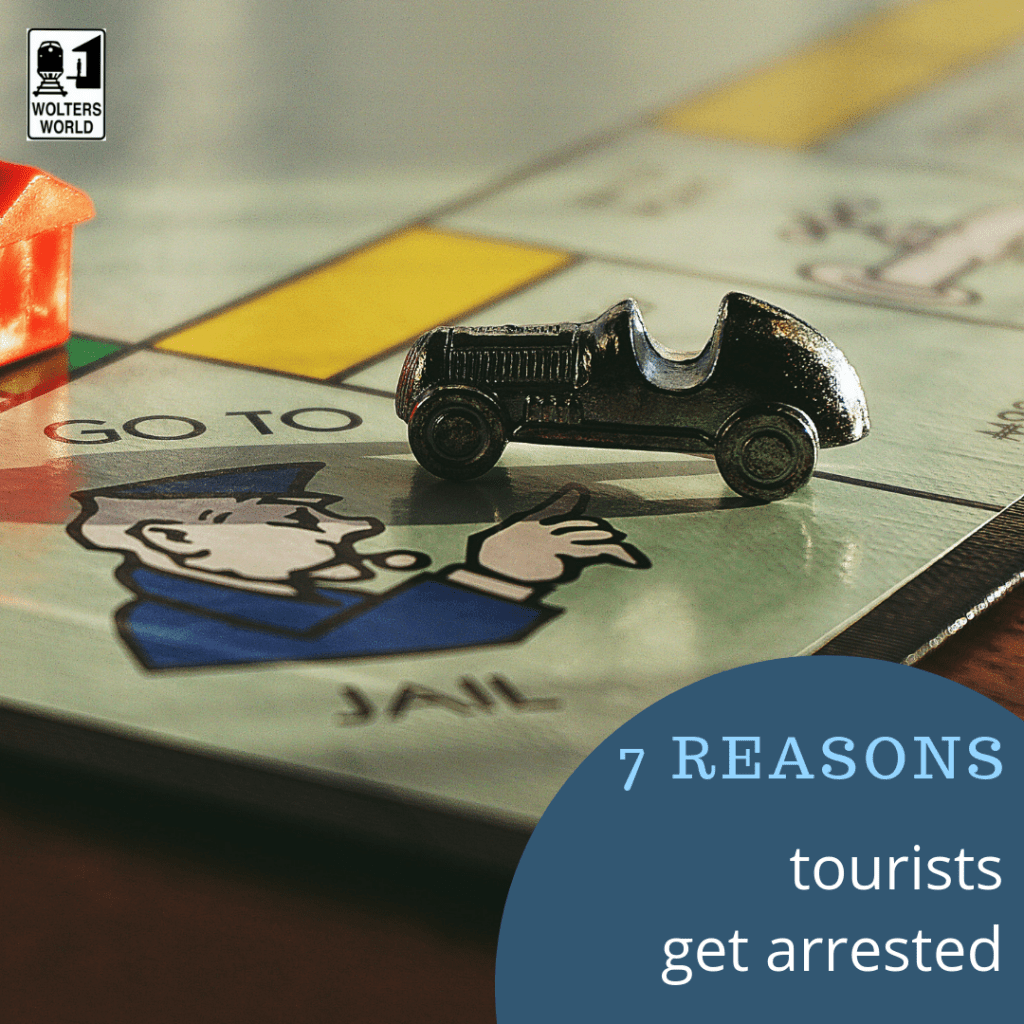
Hey there, fellow travelers! Today we’re in Barcelona, and
we’re having a great time. Some tourists may have too good of a time and end up
being arrested. So, today we’re sharing the six most common reasons that
tourists get arrested while traveling
#1 Alcohol Related Arrests
Alcohol can be the catalyst for a fun night out, or it can spell
disaster for travelers. It’s the number one reason that travelers end up
getting in trouble. From drunk driving, public intoxication to fighting, a lot
of tourists can’t seem to hold their liquor. You see this a lot in towns like
New Orleans, or European cities popular for stag parties, like here in
Barcelona. If you plan to do a bit of partying on vacation, know your limit,
look out for your friends and make sure they’re looking out for you.
#2 Drug Related Arrests
A lot of travelers think they want to include drugs in their
vacation experience, especially in places like Amsterdam. Even in places like
Amsterdam where pot is legal, it’s not carte blanche; there are still laws and
regulations around marijuana. You can be arrested for carrying it around, for example.
It happens a lot in Southeast Asia too. You do not want to end up in jail in a
foreign country; it will not be pleasant. The best thing you can do is just
avoid drugs while you’re traveling.
#3 Not Knowing Local Laws
Part of the beauty of traveling is experiencing different
cultures and customs. But that can also mean very different laws. Who hasn’t
heard urban legends of American teenagers jailed in Singapore for chewing gum?
But there really are some unique laws out there that can get you in trouble. In
Venice, you can be fined for feeding pigeons. In Thailand, it’s illegal to
insult the King. You can avoid a lot of issues by doing some research online
before your trip. You can also use the Google Translate app while traveling to
translate any signs you might see. Just because you don’t speak the local
language doesn’t mean you’re not subject to the laws.
I’d venture a guess that this is on the rise with the popularity
of Instagram. It seems that travelers will do anything to get that perfect
Instagram shot, whether it’s splashing in public fountains, ignoring barriers
or vandalizing private property. Even if it’s legal, try to be respectful of
private property and don’t be a nuisance to homeowners who happen to have a
well-photographed house.
#5 Religious Misunderstandings
A lot of those strange local laws tie back to religious origins.
Not every country has the freedom of speech that we enjoy in the United States,
so be careful when speaking about religion in a foreign country. It’s best to
avoid this topic of conversation at all, and just be a passive observer when
traveling through religious countries.
#6 Stealing
This may seem obvious, but in other countries, punishment may not always seems to fit the crime. Otto Warmbier is the best example of this; in 2016, the American university student was accused of stealing a North Korea propaganda sign in North Korea and was sentenced to 15 years hard labor. He was sent home a year later in a coma and later died.
These are the most common reasons for tourists being arrested
that we’ve observed during our travels. The best thing you can do is just be on
your best behavior when traveling. Remember, you are a guest in this country,
and you are representing Americans whether you like it or not. Have you seen
travelers be arrested for stupid things? Tell us about it in the comments!
For more travel tips and advice, check out these blog posts and
videos:
Hey there, fellow travelers! Today we’re in Cancun, Mexico,
the perfect place to talk about Montezuma’s Revenge. Many travelers in Mexico
end up with Montezuma’s Revenge, or traveler’s diarrhea. So we’re going to talk
about how you get it, how to avoid it and what to do if you don’t avoid it.
What is Traveler’s Diarrhea?
Anywhere from 30% of 70% of travelers get travel-related diarrhea
at some point during their travels. Symptoms include:
The main culprits of travelers diarrhea are unfamiliar food and
water.
Tap Water – tap water in countries like Mexico,
Peru, China and Russia is not safe for Americans to drink. You must drink
bottled or filtered water at all times, but sometimes tap water can still find
its way to you. Some travelers will even go so far as to brush their teeth with
bottled water to avoid any tap water ingestion at all.
Ice – at Mexican resorts, much of the ice is
filtered, but it doesn’t hurt to ask. In other areas, it’s best to avoid ice
all together, and that can mean passing up yummy frozen drinks as well.
Fruit and Vegetables – these are often rinsed in
tap water, and that can be enough to get you sick. It’s best to stick to fruits
that you peel (such as oranges and bananas) or cooked vegetables.
Contaminated or Undercooked food can be another
source of traveler’s diarrhea. Our son was sick for two days from bad shellfish
in Italy! Street food can be dicey, so do what we do, and go where the locals
are, or where you see a line. That’s usually a sure bet that the food is not
going to make you sick.
Poor hygiene can be another cause of traveler’s
diarrhea. Traveling in foreign countries can introduce your body to a lot of
unfamiliar germs and bacteria. Be sure to wash your hands often, especially
before preparing and eating food.
I’m Not Staying in a Tourist Area; How Can I Treat Water
Myself?
If access to filtered water or tap water is going to be an issue,
there are several water treatment systems to consider. These will allow you to
treat water on the go, which is especially important if you are trekking or
visiting remote locations not used to tourists.
Aquatabs water purification tablets
SteriPen UV Water Filter
LifeStraw filter and water bottles with built-in
filter
Even if you are not traveling in remote locations, treating your
own water is a great way to save money on bottled water, and help reduce
plastic consumption.
What Should I Bring for Traveler’s Diarrhea?
You do not want to be searching a small village for a pharmacy
(and a translator) when you are in the throes of traveler’s diarrhea! It’s best
to be prepared with anything you might need just in case. Before any
trip, you should build a small First Aid kit that includes basic items, plus
these traveler’s diarrhea medicines:
I Did Everything Right…and Still Got Montezuma’s Revenge….Now
What?
Sometimes it just can’t be avoided and you may find yourself
suffering the symptoms of traveler’s diarrhea. The most important thing you can
do is stay hydrated. This means drinking a ton of water (filter, of course!)
and electrolytes. It also means avoiding alcohol, caffeine and dairy. You may
not want to eat, but the B.R.A.T. diet can actually help you get better faster.
Bananas
Rice
Applesauce
Toast
These foods are all bland, and the complex carbs will help stop
the diarrhea. These foods are easily digestible, and will not make your
symptoms any worse. Avoid anything greasy or fatty, which will absolutely make
things worse. Don’t butter that toast!
With these tips, we truly hope you can avoid getting
Montezuma’s Revenge, but sometimes even the most diligent traveler succumbs to
traveler’s diarrhea. If you fall victim, at least you’ll know what to expect
and be prepared to treat it quickly and effectively. For more travel tips and
advice, check out these blog posts and videos:
WHey there, fellow travelers! Today, we’re in Split, Croatia on a Croisi Cruise. We’ve found there are a few key items that everyone should pack for a cruise, whether it’s a European cruise, or a Caribbean cruise. Regardless of your cruising destination, make sure you pack these six cruise essentials! This isn’t a complete cruise packing checklist, but rather six things that you may not think of unless you’ve been on a cruise before.
#1 Air Freshener
Cruise cabins are quite small, and on some cruise ships, the
windows may not open, so there’s very little air flow. Add to this the fact
that cruise ships are all about eating, and you’ve got a stuffy, stinky cruise
ship cabin. A little spray bottle of air freshener can make a HUGE difference
and create a much more pleasant environment for your travel partners. I like
Poo-Pourri; a tiny bottle is all you need!
#2 Febreze or Downy Wrinkle Releaser
These act like deodorant for your clothes, and it is nice to have
for freshening up your clothes that haven’t been washed in a while. The Downy
product has the added benefit of smoothing out wrinkles. These are both sold in
travel sizes and are really great to have on a cruise. Cruise cabins are small,
your clothes often stay smushed in your suitcase, and there’s not usually room
for an ironing board. Chances are, you are also packing lighter, and possibly
re-wearing some clothes, so it’s nice to freshen them up with something.
#3 Comfortable Headphones or Earbuds
This is especially for European cruises, which involve a lot of
shore excursions that include historical tours and museums. Most cruises give
you the cheap earbuds like the airlines hand out, and they get really
uncomfortable after a while. I like to bring my own headphones which I know are
going to comfortable. If you wear hearing aids, this is really important
because you can bring something that works with them.
No matter what kind of cabin you book, there are never enough
electrical outlets. You will be lucky to have two outlets in your room. I like
to have backup batteries for my camera so I can charge one while I’m out during
the day. Another option is to bring a power strip, but you need to make sure
you get one that is specific to cruises, called a travel strip. If you have one
with USB ports, it’s even easier.
#5 Sunblock & Bug Spray
Things like sunblock, bug screen and hats are small and easy to
pack. You can buy them anywhere, but if you buy them on the ship, or in the
port towns, you will pay a ton more for them. You may also not always be able
to find what you need. I wear 70SPF and the highest I could find in town is 30
SPF. (Don’t forget any prescription medication you need as well – pack enough
for the entire trip; don’t assume you can get something refilled along the
way.)
Small bills will really come in handy on a cruise. You want to be
able to buy small things at the ports of call, like souvenirs or snacks, and
most vendors don’t want to take big bills. Even a 20 Euro bill may be too large
for some areas. Small bills are good for tipping as well, both on the cruise
and in the port.
These six cruise essentials can make a big difference in your travels. They will make you more comfortable in your cabin, and help you save time during your shore excursions. For more travel tips and guides, check out these blog posts and videos:
Hey there, fellow travelers! Today we’re in Croatia, on a
cruise, and I thought it would be a good time to talk about seasickness. Not
all travel is sunshine and rainbows, so I want our fans to be prepared for some
of the downsides of travel, too. Many travelers get seasick on a cruise, so
today we’re talking about things you can do to prevent getting seasick on a
cruise, and if that fails, treating seasickness.
What Are the Symptoms of Seasickness?
You may feel nauseous, like you have no balance and you may feel
like you are on the verge of vomiting. And then there are stomach cramps. These
can all be the signs of seasickness.
When Does Seasickness Happen?
If you are coming to Europe for a river cruise, you don’t have to
worry as much about seasickness because the rivers don’t have big waves. Where
you might experience seasickness is out on a coastal cruise or an ocean cruise.
Many people think the bigger cruise ships have less movement and
those passengers won’t get seasick. However, everyone is different. Jocelyn
gets sick on the bigger cruise ships rather than the small ones.
How Can I Prevent Seasickness?
Picking the right cabin can make a huge difference in the
severity of motion sickness that you feel during your cruise. You want to try
to pick a cabin in the center and middle of the boat, as close to the actual
center as possible. This area experiences the least amount of movement. Having
a window you can look out will also help.
Even if you don’t think you’ll get seasick on a cruise, it’s
better to be prepared just in case. There are tons of seasickness remedies,
from holistic treatments, over-the-counter treatments to prescription drugs for
seasickness. The most common product for treating seasickness is Dramamine.
Some medications require that you take them before you get on the boat, so read
the instructions.
There are also seasickness patches that you place on the skin to
treat seasickness. These offer a slow release of medicine to help prevent
symptoms. The prescription patch that goes behind your ear is the best option.
(Note: Mark is not a doctor, so please speak with your doctor if you are
concerned about seasickness. This advice is based on traveler’s tales.)
For a more natural approach to treating seasickness, ginger is
something many people use. You can get ginger in many forms; powder to mix in a
drink, ginger chews or gum, and even ginger ale can work.
Seabands are another method for treating seasickness. These bands
work with the pressure point in your wrist to prevent seasickness symptoms.
What If I Didn’t Bring Anything to Treat Seasickness?
If you’re out on an excursion, you can just visit the local
pharmacy and tell them you have seasickness; they can point out the proper
medication. On a larger cruise, the shops will definitely sell different
remedies for treating seasickness, and if you’re on a smaller cruise, just ask
the crew. They will likely have something they can give you. The really big
ships even have medical personnel on board if you think you need to speak with
a doctor.
I hope this helps our fellow travelers who are getting ready
to go on a cruise. Hopefully you won’t get seasick at all, but at least you will
be prepared and know what to do when your tummy starts to rumble. For more
travel tips and guides, check out these blog posts and videos:
Hey there, fellow
travelers! We often get travel questions from our fans, so today I’m going to
focus on a topic that comes up quite often: money. We’ll cover how, when and
where to exchange currency, plus everything you need to know about money in
Europe.
How Do I Get the Best Deal Exchanging Currency?
The best deal you can get is not to exchange currency at all.
You’ll get the best exchange rate from your home bank, so the best thing to do
is to use your ATM card to withdraw cash in the local currency. Don’t forget to
tell your bank that you’re traveling abroad; they will put a flag on your
account to authorize the transactions. If you forget to do this, you’ll most
likely be declined at the ATM. Do this with credit cards, too and make sure you
have your PIN for every card you have. (Have a list somewhere of phone numbers
for your cards in case you need to reach them.)
What If I Don’t Want to Use My ATM and Credit Cards?
If you don’t want to use cards and insist on bringing cash along
to exchange, you’re going to pay a lot regardless. There really ins’t a “best
place” to exchange currency, but the worst place is at the airport. You know
how you pay $4 for a bottle of water at the airport? Well, the currency
exchange rates are equally inflated because you are a captive customer. On top
of a poor exchange rate, you’ll pay a lot of fees. You’ll find the same bad
rates and fees at the money exchange shops in the tourist areas of town.
Your best bet is to look for a large international bank, and see
if they will exchange your currency. They may or may not, depending on the
bank. In the US, most banks will only do this for customers who have an account
with the bank.
Should I Exchange Money Before My Trip?
Many travelers like to have local currency before arriving to a
destination, while others just wait until landing to get local currency. You
can get some Euros or Pounds from your local bank before you leave for your
trip, but it’s not usually a very good rate. We wait until we land at a new
destination, and we use our ATM card to withdraw cash. Worst case scenario, you
can always exchange some of the cash you have if the ATM doesn’t work.
Do I Want the Transaction in Local Currency or Converted to My
Home Currency?
Some ATM’s (and shops, hotels and restaurants) will offer to
convert your transaction into your home currency. You may like this option
because it’s easier to tell how much you are spending, but the exchange rate is
much worse than what you will get from your bank. The vendor is going to take a
cut for this “convenience” and you’ll end up paying more. So, if you are asked
“would you like this in dollars or Euros?” choose dollars and let your bank do
the conversion.
Is Cash or Card Better in Europe?
You can still use cash almost anywhere in Europe, and many
smaller towns and establishments prefer cash, especially for smaller purchases.
They won’t be happy if you try to charge a can of soda or a pack of gum. The
same applies for large bills; vendors will not want to take a 100 Euro bill for
a small purchase, so try to have smaller bills and coins to carry around. Since
the ATM generally gives out big bills, your hotel can break this into smaller
bills.
What If I See Prices in Euros But I’m Not in a Euro Country?
Similar to letting the vendor convert your credit card charge
before running the transaction, many places will try to “help” tourists by
posting prices in Euros, even though that’s not the local currency. Again, you
are then getting their exchange rate, which is never better than the exchange
rate your bank will give you, so if you can, pay in the local currency.
I Don’t Want to Carry a Lot of Cash; What Do You Recommend?
Carrying a lot of cash is a good way to become a target for
thieves, so it’s a good idea not to carry a ton of cash at all times. We like
to rely on a combination of cash and credit cards while traveling abroad. Visa
and MasterCard are accepted almost everywhere; while American Express is
sometimes accepted. Diners Club and Discover Card are more difficult to use.
Regardless of the card, make sure you know the PIN. Use your credit card where
you can, then save your cash for the places who won’t accept cards.
Something else you should do is to split up your cash. Keep it in
a few different places on you, and lock some away back at the hotel. This way, if
you lose some or are pickpocketed, you won’t lose all of your cash. Keeping a
small amount of cash readily available also saves you from flashing a huge wad
of cash when making small purchases. I like to keep a small amount in a pocket,
with more tucked away in my wallet.
Should I Use My Debit Card or Credit Card?
To withdraw cash at a foreign ATM, your best bet is to use your
debit card for the best rate and lowest fees. Credit cards often have a higher
fee and higher interest rates on cash withdrawals, so this should be an
emergency backup only. For charging transactions, your credit card is fine,
especially if you are earning airline or hotel points on your purchases.
What if My Card Gets Stolen?
This is why it’s important to have a list of the phone numbers
for your cards; if a card gets stolen (or lost), you need to be able to reach
out right away. However, know that it can be difficult to get a new card issued
to you right away, especially if you are moving every few days to a new
location. For this reason, it’s a good idea to have at least two credit cards
while traveling, and keep them in separate places.
What About Traveler’s Checks?
Traveler’s checks used to be very popular before the digital age.
They’ve pretty much died out, and you really don’t see them any more, nor will
many places accept them. If you want something pre-paid to keep you on a
spending budget, you can get a prepaid credit card. Prepaid cards also have a
better backup option if stolen, as you can get the money refunded and turn the
card off.
Should I Exchange All My Money Before Heading Home?
We come to Europe three or four times a year, so we always keep a
bit of currency leftover for our next trip. However, if you’re not sure whether
you’ll return, or if you just prefer to have the money back, there are a few
options:
Use up all of your cash before you leave. If you
are pretty good at budgeting your travel, this is pretty easy and you can use
up the last of your currency buying snacks at the airport.
Donate it. Many airports have a donation bin
near customs where you can toss in your leftover change and donate it to a
local charity.
Your bank at home can often change your currency
back to local currency, although I found that banks often only accept bills,
not coins, so you could still have a good chunk of change leftover, given the
value of Euro coins.
Sell it to a friend or coworker. Chances are,
you know someone heading to Europe in the future. Offer to exchange currency
with them; you’ll both get a better rate than the banks, and they’ll start
their trip with a bit of cash.
Will My ATM Card Work?
In some countries like Italy, you will need to have a chip card
to use your card. At night, you need the chip just to unlock the door to get to
the ATM. And although the local language may not be English, it’s always an
option so you just have to look for that and choose English. For Chinese
travelers, Union Pay is becoming more widespread in Europe, too.
What Do I Need to Know About Euro Coins?
Unlike in the US, the coins in Europe are actually valuable. A
two Euro coin is worth more than $2, so hang on to them. Don’t throw your coins
away, but use them when you can, or your wallet will get pretty heavy very
quickly. Try not to take too many coins home with you as they are harder to
exchange than bills.
I hope these travel money tips answer some of your money
exchange questions. With these tips, you should be able to save some money in
fees, and get the best exchange rate for your money, which means more money to
spend on travel! If you’d like more travel tips, check out these blog posts and
videos:
Hey there, fellow travelers! Today, we’re in Clearwater Beach,
Florida. Florida is one of the most popular U.S. destinations for international
travelers, so today we’re giving travelers an overview of what to expect when
staying at hotels in the United States. For this post, we’re only looking at
hotels, but there are tons of other accommodation options in the US, including
Bed & Breakfasts, Airbnb, hostels and campgrounds. And specifically, we’re
going to look at the hotel chains that you will find all over the United
States, and give you an idea of what to expect when booking these hotels.
What is the Difference Between a Hotel and Motel?
In the most basic terms, a hotel has interior, enclosed hallways.
A motel, which is derived from “motor lodge” or “motor hotel” has exterior
hallways and you can usually drive right up to your room. These were pretty
popular in the 50’s and 60’s, and today are usually a cheaper (but more dated)
option. Some travelers may feel less secure in a motel with doors that lead
directly outside. These terms are a bit dated, so the name hotel or motel does
not always indicate the hotel layout. Check photos online if you want to be
sure.
How Do I Choose the Best Hotel?
Online reviews have changed the travel game for everyone. In the
US, you can find reviews on TripAdvisor, Bookings, Trivago and even Yelp or
Google. We live by Trip Advisor reviews, and rely heavily on them to make our
hotel selection. Don’t just look at the 5-star and 1-star reviews; read some of
the 3- and 4-star reviews for a well rounded picture of what the average
traveler experienced.
What Are the Room Types in an American Hotel?
A double room in the United States means two double or queen size
beds, which can each sleep two people. Unlike hotels in Europe, where a double
room just sleeps two people, a double room in the US can sleep a family of four
comfortably. The other option when booking your room is one king size bed,
which is huge! You can fit two adults and a couple of kids in a king size bed
with no problem.
How Much Should I Expect to Pay for a Hotel in the US?
$100 is an average room rate for a decent overnight hotel in the
United States. Paying less than $100 anywhere in the US will put you in the
budget travel category and you can expect fewer services and dated rooms. In
big cities or major tourist destinations, you can expect to pay between
$200-$300 for a comfortable, updated hotel room. When you are choosing your
hotel and comparing prices, remember that taxes are not included in the room
rate. Taxes can add another 10-20%, depending on state and city taxes that are
applied.
What is Included in My Room Rate?
Oddly enough, the more expensive the hotel, the fewer free things
you will receive with your room rate. The more moderate hotel chains, like
Holiday Inn Express, Hampton Inn or La Quinta will provide a free breakfast,
free WiFi and free parking. At some of the more upscale resorts and hotels, you
can expect to pay a “resort fee” that can be around $25 per day, which covers
WiFi and pool towels. Breakfast and parking will be extra on top of the resort
fee. Be sure to read the fine print when you make your reservation, as the
resort fee can be hidden and is almost never shown in the initial price you
see.
How Do I Pay for My Hotel?
When you book a hotel online, you will be asked to provide a
credit card to hold the room. When you arrive to check in, you will be required
to show the credit card, and a photo I.D. Even if you want to pay cash for your
hotel room, you will still need to provide a credit card until you check out.
The hotel will place a “hold” or temporary charge to your card that covers any
incidental charges, like movies or room service. Once you check out and pay,
this hold will be removed from your card. In many hotels, you don’t even need
to check out at the front desk any more; often, they will slip the invoice
under your door overnight and if everything looks OK, you can just leave the
key in the room when you depart.
Where Can I Charge My Devices?
Electrical outlets can be a challenge in hotel rooms, but this
seems to be improving. Hotels are starting to add more outlets and USB ports
built into the nightstand or lamps. Often, there’s just one electrical outlet
near the bed, and it’s already being used by the alarm clock and the table
lamp. Traveling with a power strip can be a lifesaver.
What is the Hotel Breakfast Like?
This will vary by hotel, but many hotels offer a complimentary
continental breakfast. At a roadside mom and pop motel, this may mean a danish
and some orange juice. At most hotel chains, like Holiday Inn Express, the
continental breakfast is pretty generous. There’s usually a hot dish, like eggs
or pancakes, an assortment of cereal and milk, plus toast, bagels and English
muffins. Many Europeans expect to see meat and cheese, but that’s not usually
offered as part of the continental breakfast. Also, these are almost always
buffet style, meaning you can eat as much as you want. This can be a great way
to save some money on travel by eating free breakfast at the hotel. Also, the
time breakfast is served will vary quite a bit, even from weekday to weekend.
If you have a super early departure, before 6am, sometimes the hotel can make
up a to-go breakfast for you since the breakfast won’t be open yet.
What Can I Expect on The Television?
Every hotel room has a television, with standard cable and some
Pay Movie channels. You’re not likely to find any international channels,
although many towns have at least one Spanish channel. In areas that see a lot
of international visitors, there may be one or two international channels. The
pay movies are new releases you can watch in your room, but they can be
expensive, and will be charged to your hotel bill.
Where Can I Find Hotel and Local Information?
Each hotel room in the U.S. comes with a folder or binder that is
full of important hotel information, as well as local recommendations. The
folder may also have discounts or coupons for local restaurants. For more
personalized recommendations, ask the front desk staff or the concierge for
their favorite restaurants and attractions. If all else fails, check
TripAdvisor for local recommendations.
What If I’m Driving Across the US? Where Do I Stay?
Any trip to the United States will likely involve some driving,
but if you are planning a long road trip in the US, you may worry about where
you will stay each night. Fortunately, there are many hotel chains with
locations along major interstates that are specifically meant for travelers
just passing through for one night. Motel 6, La Quinta, Comfort Inn, etc all
have convenient locations at Interstate exits. Most of the time, you can just pull
in and get a room without reservations. However, if you are visiting a popular
destination (say New Orleans as opposed to Exit 187 off I-80 in Nebraska) then
you will want to make reservations in advance.
How Does Parking Work at Hotels in America?
In smaller towns, parking at your hotel is usually free. In big
cities like Chicago and New York, your hotel may not even offer parking, and if
they do, it will be expensive. When you are visiting US cities, and comparing
hotel rates, this is something to keep in mind. A great deal on a Chicago hotel
may not be such a great deal when you add on $60/night for parking. We prefer
to visit cities without a car, only renting a car once we leave the city.
How Big Are the Hotel Rooms in America?
Compared to European hotels, American hotels rooms are usually
pretty spacious, although there are exceptions, especially in New York.
Some of the more expensive hotels in the US will have a mini-bar,
meaning your refrigerator is stocked with water, soda and alcohol. Most minibar
systems are very sophisticated and can tell if you try to replace something, so
don’t try to fool the mini-bar. Bring your own drinks, or be prepared for an
expensive bill at checkout. The same goes for the lovely tray of snacks sitting
out on the counter. If you are traveling with kids, you might want to put those
$8 bags of M&M’s out of reach!
What if I’m Traveling with Kids?
US hotels can be very accommodating for families traveling with
children, but you have to let them know your requests ahead of time. Many
hotels will have baby cribs or PackNPlay’s you can use, but there are often a
limited number, so be sure to reserved them prior to your arrival so they don’t
run out.
Most of the chain hotels will have a pool, even if it’s just a
small one. This can be a lifesaver for tired parents who need to wear out the
kids before bed. There isn’t usually a lifeguard, though, so you have to watch
your kids carefully.
What if We Fly Out Late at Night? Do We Have to Pay for a
Night We Won’t Use?
Many times, you may have a late evening flight back home but your
hotel checkout time is 11:00 am or noon. You don’t have to pay for an extra
night, although some hotels will allow you to pay a late checkout fee to stay
longer. Most hotels will store your luggage for you, so you can go explore
during the day and collect your luggage before heading to the airport.
What If We Arrive Early in the Morning? Can We Check In Early?
Early checkins can vary by hotel and by day. If you are arriving
at your destination very early in the morning, it may be worth it to book your
room for the night before. Early check in is based on availability and if the
hotel is fully booked, with a noon checkout time, you may not be able to check
in before 3 or 4 p.m. Some hotels may charge an early arrival fee, while other
will accommodate you if possible.
What Do I Need to Know About the Bathrooms in US Hotels?
For starters, you can throw your toilet paper right down the
toilet. The garbage can in the bathroom is not for used toilet paper, but for
anything else you might toss out, like tissues or cotton swabs and dental
floss. Most hotels have a hair dryer in each bathroom, although you may have to
hunt for it. Soap, shampoo, conditioner and lotion are usually provided in the
bathroom, as well as washcloths, hand towels and bath towels. You can leave
your used towels on the floor, and they will be replaced by housekeeping. If
you prefer to reuse your towels, just hang them up.
Most US hotels now use electronic key cards that are programmed
for the duration of your stay. A few of the older motels or fancy hotels may
still use the old-fashioned keys. Unlike some European hotels, your room key is
yours to keep during your visit. You don’t need to leave them at the front desk
when you leave the hotel.
What if I Need Something During My Stay?
If your air conditioning stops working, or you just need extra
sheets or pillows, you can request them from hotel staff. The phone in your
room will have pre-programmed buttons for the front desk and housekeeping, so
just give them a call. You will not be charged for phone calls made within the
hotel.
How Can I Do Laundry at the Hotel?
Some hotels in the US have a laundry service where you can send
out your laundry and it comes back that evening or the next day. (This is
pretty expensive, however.) Other hotels will have a laundry room where you can
do your own laundry. Those hotels will often sell laundry soap at the front
desk. If laundry is important, make sure you call ahead because it varies
greatly from hotel to hotel.
I this helps international travelers know a little bit more
about United States hotels. Do you have more questions about traveling in the
United States? Leave them in the comments; we use your questions to help decide
what to write about in the future! For more travel tips, check out these blog
posts and videos:
This website uses cookies to improve your experience. We'll assume you're ok with this, but you can opt-out if you wish.AcceptRead More
Privacy & Cookies Policy
Privacy Overview
This website uses cookies to improve your experience while you navigate through the website. Out of these, the cookies that are categorized as necessary are stored on your browser as they are essential for the working of basic functionalities of the website. We also use third-party cookies that help us analyze and understand how you use this website. These cookies will be stored in your browser only with your consent. You also have the option to opt-out of these cookies. But opting out of some of these cookies may affect your browsing experience.
Necessary cookies are absolutely essential for the website to function properly. This category only includes cookies that ensures basic functionalities and security features of the website. These cookies do not store any personal information.
Any cookies that may not be particularly necessary for the website to function and is used specifically to collect user personal data via analytics, ads, other embedded contents are termed as non-necessary cookies. It is mandatory to procure user consent prior to running these cookies on your website.