Seven Successful Tips For Learning a Foreign Language
Hey
there, fellow travelers! Part of the fun of traveling is learning the local
culture and picking up some of a new language. Being able to speak the local
language can totally change your travel experience. While it’s pretty easy to
get by on English these days, learning a foreign language is never a bad idea.
So, today, I’m sharing seven tips on how to learn another language. These are
tips I actually use to learn a new language before traveling.
#1 Be
Serious About Learning
You can have fun learning a foreign language,
but you have to take it seriously. If you just pop a CD in your car and listen
to it every once in a while, you’ll never learn the language. Treat it like you
would anything else you want to learn and set aside time to study it. If you
want to learn a foreign language, you have to make it a priority.
Most language books aimed at travelers are
phrase books. All these do is teach you to repeat phrases, so having a
conversation can be very difficult if the person you are talking to doesn’t ask
the question you’ve rehearsed. With a grammar book, you can learn how to form
your own sentences, which is much more conducive to conversation.
#3
Watch International Programs
The Internet allows us to watch TV shows and
programs from around the world. I like watching Internet TV the best because
you can turn on the subtitles (also in the foreign language) and see what the
words look like, which helps you sound them out. If you’re trying to learn
Spanish, most DVD’s have an option for Spanish subtitles, so you can listen in
English and read along in Spanish, or vice versa.
#4 Read
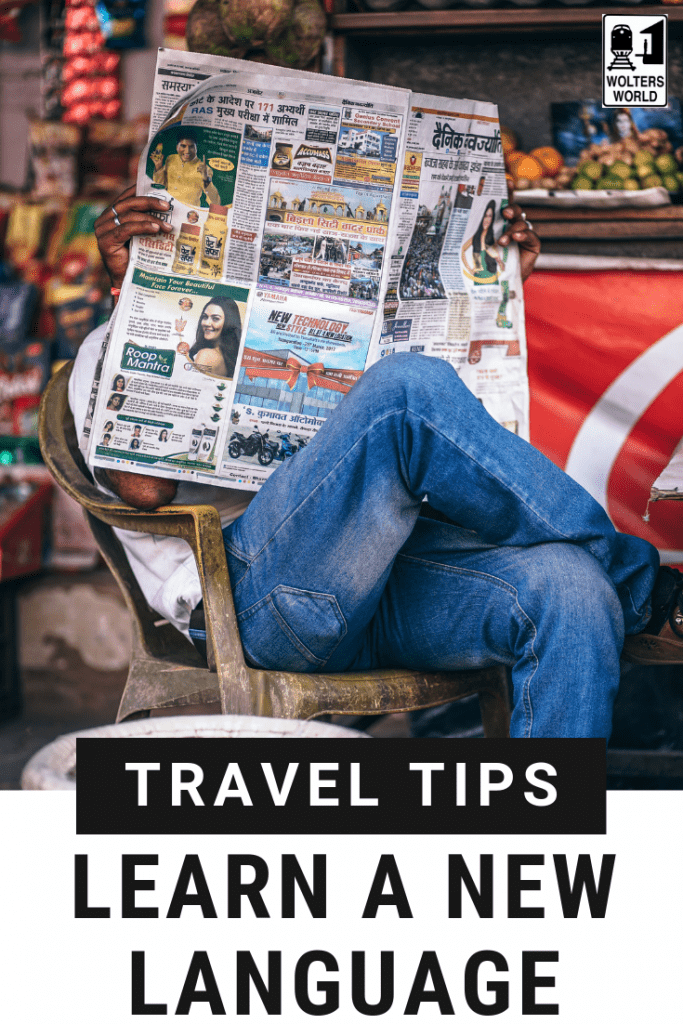
the Newspaper Out Loud
Newspapers are a great way to learn a foreign
language because they are usually written for about an eighth-grade reading
level, so it’s not super technical. By reading it out loud, your mouth gets
used to making the sounds of the local language, even if you don’t quite know
what you’re saying.
#5 Find
Someone to Practice With
If you can find a local person who wants to
practice conversation with you, it will really help you learn a foreign
language quickly. You can set aside an hour per week, and split the hour in
half so that you each get a chance to learn a new language for 30 minutes. This
can really help you advance beyond studying on your own using books and CDs.
You may know more than you think, but are
hesitant to use what you’ve learned. Just do it! Of course, you will make
mistakes, but that’s expected and totally forgivable. The locals will
appreciate you for trying! The more you speak, the more confident you will
become.
#7
Tequila!
If none of the above tactics work, a little
bit of tequila goes a long way to loosen up your tongue!
I hope
this helps you feel better about how to learn a foreign language and encourages
you to give it a shot. Whether you want to learn Spanish, Russian, German or
any other language, these tips will work! Do you have other tips on the best
way to learn a language? Tell us in the comments! For more travel tips and
advice, take a look at these other blog posts and videos:
Hey
there, fellow travelers and potential study abroad students! Today I’m in
Madrid, Spain, which is a hot-spot for study abroad programs. I studied abroad
in several places, including Australia, Finland, Argentina, Brazil, and
Portugal. I always had a lot of options for study abroad accommodations, and I
never knew which was the right option to choose. So, with my hindsight, I
thought I would share with students some tips on choosing your study abroad
housing situation.
There are three basic study abroad options, so
I will give you the pros and cons of each option.
Study
Abroad Option #1: Living with a Host Family
Pros: Living with
a host family while you study abroad can be great. You have a built-in tour
guide, language learning every day, you learn a lot about the local culture,
and you have someone looking out for you.
Cons: Usually, you
will have more rules when you live with a host family, and you will sometimes
feel obligated to hang out with them when you might rather hang out with your
new friends. And, it can cramp your style, especially if you come from a home
without a lot of rules and end up with some strict host parents.
Bottom Line: If your goal with study abroad is
to learn the local language and culture, then staying with a host family is the
best option. It’s the best way to immerse yourself and learn the most outside
of school.
Study
Abroad Option #2: Rent An Apartment (With or Without Roommates)
If you want to rent your own apartment, there
are three options: get your own place, room with other study-abroad students,
or room with a local.
Rooming with a Local: This can be a pretty difficult option to come across, especially if
you are looking for a short-term rental for less than a year. It’s not the most
viable option, but with things like Airbnb, you may be able to find a room to
rent with a local.
Renting your own place: Having your own apartment while studying abroad allows you the most
freedom, but it is a lot more difficult to meet people and make friends when
you are isolated in your own place. It does force you to get out and meet new
people on your own, but this may not be the best option for introverts.
Renting with other students: Rooming with other exchange students gives you more options for
friends, you get to hang out with people from all over the world, and you’re
all going through the same thing together. The downside of this is meeting
fewer locals, as you and your friends stick together and explore all the new
sights.
In the United States, most dorm buildings are
on campus, but that’s not always the case in Europe. In Berlin, my dorm was 45
minutes by train to the campus. Some dorms will be near the campus, and others
won’t, so you have to do some research ahead of time.
Pros: You’ll be
surrounded by students, and not just other exchange students. You’ll meet a ton
of locals and get to know their culture and the language. Many times, these
locals are not from the city where you’re studying, so making friends and going
to their hometown for a weekend or holiday is a great way to see more of the
region where you are studying.
Cons: Dorm rules
in Europe can be pretty strict. Many times, you are not allowed to have friends
stay over or visit, so that can be annoying, especially if you have friends who
want to visit from your home country. Again, a bit of research can help you
figure out if this is going to be an issue with your particular destination.
I hope
this helps you get a sense of what your options are for study abroad
accommodations. Your decision largely depends on what you are looking to get
out of the study abroad experience. No matter what you choose, I wish you an
amazing time in your studies and travels. For more travel tips and advice,
check out these blog posts and videos:
Hey
there, fellow travelers! Ever have the feeling where your heart drops into your
stomach like you might throw up? That’s the feeling you get when you lose your
passport while traveling, or even if you just think you’ve lost your passport.
Today, we’re sharing what you should do about a lost passport or a stolen
passport.
#1
Retrace Your Steps
Once you declare a passport stolen, it is
invalid, and there’s no “undo.” So, before you declare your passport missing,
look again. Check everywhere in your hotel, your suitcase, the hotel front
desk, and any restaurants or shops you’ve visited. Retrace every step to the
last time you remember seeing your passport.
Find out where your embassy or consulate is,
and call them to report your passport as lost. If someone gets a hold of your
passport, it can be very easy to steal your identity, and that’s just not
something you want to deal with. So, once you are sure that it’s lost, report
it to your embassy.
#3 File
a Police Report
If your passport is stolen, you should also
file a police report with the local police. You may need a police report for
insurance purposes, but it will also help in case of any identity theft issues
that may come up.
#4
Apply For a New Passport
Next, you will need to go in person to the
nearest consulate or embassy to apply for a new passport. If you are not in a
major city, you may have to travel to one in order to find an embassy. This can
be a challenge if you don’t have a passport, but having documentation and a
copy of your passport should help if you run into any issues. Take as much
documentation as you can when you go to the embassy. If you have a couple of
weeks to wait, you can get a regular passport that is good for ten more years.
However, most travelers are on a week or two-week vacation and can’t wait
around for a new passport to be issued. In that case, you can get an emergency
passport, but it’s usually only good for a few months, and you will need to get
a new passport when you get back home.
If you are traveling on a work permit or visa
that was inserted into your passport, you will have to go through that entire
process again as well. Some places will re-issue your visa or permit, while
others will make you re-apply.
#6 Make
Copies of Your New Passport
Once you get a new passport, make copies right
away, and scan one into the cloud or email so you have a digital copy.
#7 Set
Up a Credit Alert
Once your passport has been stolen, it’s not a
bad idea to set an alert on your credit score, just in case anyone tries to
open a credit card or account in your name. It’s also a good idea to keep an
eye on your bank and credit card accounts to avoid any suspicious activity.
Hopefully,
you will never need these tips, or you will find your passport when you
re-trace your steps, but if you do lose your passport, don’t panic and follow
these steps to a resolution. Our best tip is to keep your passport in a hotel
safe and carry around a copy. If you do this, you won’t need to worry about a
lost passport at all! For more travel tips and advice, check out these blog
posts and videos:
Hey
there, fellow travelers! Today we’re in Vienna, Austria at Schloss Belvedere.
Our topic today is all about the travel documents you need for overseas travel.
This isn’t just a checklist to check right before your trip; some of these
travel documents can take a few months to procure, so it’s never too early to
get started!
#1
Passport
The number one thing you need to have when
traveling abroad is your passport. If you aren’t sure when you are going to be
traveling overseas, go ahead and apply for a passport as soon as possible. It
can take up to two or three months to get your passport, so don’t pay
expediting fees unless you need to. You also need to make sure that your passport
is valid for six months beyond your planned travel, or you could be declined
entry when you land at your destination.
This is not required for all countries, but
it’s something you need to find out ahead of time. Visa requirements vary
greatly between destinations and countries of origin. If you are American
traveling to Europe, as of 2019, you do not need a visa. If you are visiting
Russia or China, regardless of your country of origin, you will need to apply
for a visa in advance. Other countries, like Cambodia, will issue a visa on
arrival, but you have to have cash and paperwork ready. So, wherever you are traveling
to, make sure you do your research ahead of time to see if you need a visa in
advance, and what the visa requirements are. It can be expensive, especially
considering that every member of the family will need a visa.
I recommend carrying two copies of your
flights and trip itinerary. Take one to carry with you, and give one to a
friend at home. Upload a third copy to the cloud, but don’t rely on this as
your only copy as you may have trouble accessing the internet when you need it.
Some countries will want to see proof that you have transportation booked to
return home, so it’s crucial to have your flight information easily accessible.
#4
Hotel Reservations & Payments
Similar to your airline tickets, make sure you
have printed copies of your hotel reservations that also show any payments
you’ve already made. Again, leave a copy with someone at home, but keep a
printed copy on you that is easily accessible. I once had an innkeeper in
Ireland who wouldn’t accept my email on a phone as proof of our reservation, so
we had to go find someplace to print it. Since then, we always keep a printed
copy of hotel reservations. This is especially important if you book through
3rd party websites, such as Booking.com or Expedia.
#5 All
Other Reservations
Make sure you have a printed copy of any
reservations you’ve made for your trip. Whether it’s a train ticket, tours or
attraction tickets that you’ve pre-purchased, have everything printed out and
easy to access during your trip.
#6
Documents to Leave at Home
Before you leave for your trip, make a copy of
your passport and any tourist visas, and leave those with someone at home. Keep
a copy with you as well, but keep it somewhere other than the originals, in
case you lose the original. I like to keep one set in a hidden zipper
compartment in the suitcase, while the other one stays with me. If you are in a
city with a lot of pickpockets, don’t carry your passport around; keep it in the
hotel safe, and carry the photocopy instead.
#7
Credit Card and Bank Numbers
Make a copy of all credit card numbers and
bank numbers and leave those with a trusted friend or family member. You also
want to write down the phone numbers for your credit cards and keep those
somewhere in your suitcase in case your card is lost and you need to reach the
credit card company.
#8 File
a Travel Plan With Your Bank
Before you leave the country, let your bank
know that you’ll be traveling. They’ll want to know where, and when so they can
put an alert on your account. You can also do this online with most banks, and
you’ll just set a date range and the countries you are visiting. If you don’t
do this, you may find your card declined upon arrival, and then you’ll need to
contact your bank to free up your card.
These
are documents you should have squared away before leaving on a trip. What else
would you add to this list? Tell us in the comments! For more travel tips and
advice, check out these blog posts and videos:
Hey there, fellow travelers! Today, we’re in Vienna, Austria, one of my favorite cities. When you think about travel, you think about the beautiful sights you’re going to see, the delicious food you’re going to sample, and the experiences you will have. What you probably don’t think about are all the travel scams and rip-offs you might fall victim to as a tourist. What’s worse, in places like Spain and Italy where these scams are so common, the police are not usually willing to get involved. So, today we’re sharing some of those travel scams to help you be more aware and prepared to avoid these travel scams.
Bird
Poop / Mustard Scam
I see this one a lot, and it’s even happened
to my parents. Someone will walk by you and notice something on your shirt, or
they may even “accidentally” squirt some mustard on you. They nicely offer to
help clean you up, while their accomplice swoops in to pickpocket you or snatch
your bag while your attention is diverted. Even if there is something on your
shirt, politely refuse help and clean it off yourself.
Mother
& Child Scam
There are a few versions of this one. It can
be a large group of children that surround you and beg for money while one of
them snatches your wallet or passport. You might also have a woman ask you to
hold her baby for a minute, and when you hand back the baby, your wallet is
missing. Don’t be fooled by innocent looking children; their parents have put
them up to this, knowing that children are less likely to look suspicious.
The
Bump
This pickpocket move is a bit more
traditional; someone on the street or on public transportation will bump into
you. A few blocks later, you realize your phone (or wallet or passport) is
gone. You might think you would definitely feel this happening, but you can’t.
These thieves are trained professionals, and super smooth when they are picking
your pocket.
Another common pickpocket trick is for someone
to follow you closely through the turnstile. You think they are just trying to
get a free ride on the Metro, but they are actually picking your pocket as you
pass through, and there’s so much going on, you won’t even notice. Pay close
attention when you are getting on or off public transportation; it’s a common
spot to be pickpocketed because the doors close and you are on your way while
your wallet remains behind.
Not all taxi drivers are bad, in fact, some
are quite helpful, however, not all of them have your best interests at heart.
Taxi scams are pretty common, where the taxi driver takes the extra long way to
arrive at your destination. They know you probably don’t know where you’re
going, and they can make a few extra bucks on the fare. Sometimes, they’ll also
“forget” to turn on the meter and then try to overcharge you. Another scam is
quickly unloading your bags and taking off before you have a chance to count
your bags.
How to
Avoid Falling for a Scam Taxi:
Take a photo of the cab, license
plate, and driver’s information
Make sure they turn on the meter
right away
Know how much it should cost
Have the hotel call the cab for
you
Keep your eyes on your luggage
when loading and unloading
Don’t pay until you have all of
your luggage out of the trunk
Get a receipt
Hotel
Scams
Some hotel scams, such as fake hotels that take your booking and your money, are becoming less common as you can book through big websites like TripAdvisor or Booking.com and have prior reviews and verified properties. However, there are other hotel scams to look out for. One is a phone call reportedly from the front desk, asking for your credit card number. Do not give out your credit card number over the phone. Offer to come down to the front desk to settle the issue. A hotel rip-off is the hotel breakfast. If the breakfast at your hotel isn’t included, don’t pay for it; you can get a better deal elsewhere, as hotel breakfasts are always overpriced.
Wait
Staff Scams
Every once in a while, I hear about someone
getting scammed at a restaurant. Either by being charged too much for something
they didn’t order or getting incorrect change back from the waiter. Sometimes,
you might order something that doesn’t have a price. Make sure you ask the
price before ordering, or they will likely upgrade you to the most expensive
option.
WiFi
Scams
This one is common at hotels, restaurants and
other public places. What looks like a free WiFi signal is actually a trap to
capture your private information. Make sure you ask your hotel what the WiFi
name is, along with the password. Pay close attention when you are logging in
to a WiFi network, as the fake ones will often be spelled very similarly to the
real one. Holliday Inn versus Holiday Inn, for example.
Sympathy
Scams
Sometimes when you are eating at a restaurant,
someone will drop off a card telling you they are blind or deaf, or some other
way to drum up sympathy from you. Often, it’s not even true, but it’s almost
always a scam. Don’t even take the card from them, or they’ll expect you pay
them.
Games
Be wary of any game that someone on the street
asks you to play. Whether it’s a card game, a shell game or any other game.
Even if you see other people winning, those people are probably planted to fool
you. Don’t fall for it! These games are set up to take your money. Another form
of this is the betting game. Someone will bet you something silly, like
guessing where you got your shoes. The answer is “on your feet.” Just walk away
when people approach you on the street for betting or games.
Police Shake Downs
In almost everywhere we’ve traveled, the
police are usually helpful. However, there are a few places where the police
are not helpful. Barcelona is the pickpocketing capital of the world, and the
police will laugh at you if you try to report something. It almost feels like
the police are in on the scams. In some places in Eastern Europe, you might
encounter police looking for bribes. If you feel like you’re in a bad
situation, ask to be taken to the consulate or the police station.
Airline
Rip-Offs
When people visit Europe, they are enticed by
low-cost carriers that fly between European cities, like RyanAir and EasyJet.
They will advertise a flight for 39 Euros, but once you add on everything else
you need, you end up paying way more. Everything is a la carte on low-cost
carriers, and even some of the big airlines are getting in on it too. You may
pay extra for luggage, carry-on items, a printed boarding pass, seat selection
and even for using a credit card. Some of these low-cost carriers also fly into
airports that are far outside the city you are visiting, so you may spend more
on a taxi to get from the airport to town than you spent on your cheap flight.
Make sure you factor in all the costs before falling for these airline ripoffs.
Hopefully,
by discussing these travel scams and rip-offs, we can help you avoid becoming a
victim. Have you been a victim of a travel scam? Tell us about it in the
comments! For more travel advice and tips, check out these blog posts and
videos:
Hey
there, fellow travelers! We’re in Paris at Sacre Coeur, and I’m under the
weather with a cold and my son is projectile vomiting back at our apartment.
It’s not fun to be traveling when you’re sick, but sometimes it happens.
Whether you are flying with a cold or dealing with tummy troubles, being sick
on vacation is the worst. So, today I’m sharing six things that suck about
being sick while you are abroad.
#1 You
Feel Like Garbage and Feel Like You’re Wasting Your Vacation
When we are sick, most of us just want to
spend the day in bed recuperating, and that’s typically what your body needs.
But when you’re on vacation, this seems like a huge waste. You feel like you’re
throwing your money away on a vacation you’re not enjoying and your travel
companions resent you because you’re slowing them down. Missing out on all the
great sights you had planned, or forcing yourself to visit them when you don’t
feel well, is one of the worst things about being sick on vacation.
When you get sick at home, it’s easy to pop
into Walgreens or CVS and pick up some NyQuil or Advil. However, not all
medicines translate to other countries. At home, you know exactly what NyQuil
or Advil looks like and you can grab it and go. If you’re in a foreign country,
the products will be different. The best thing to do is to find out the active
ingredient of the product you use at home, rather than the brand name, then ask
for that at the pharmacy. So, you may need to ask for acetaminophen or
ibuprofen instead of Tylenol or Advil.
#3
Knowing What Requires a Prescription
There are some things back in the States that
do not require a prescription, but they may require one in the country you are
visiting. And vice versa; there are things that require a prescription in the United
States that are available over the counter abroad. Figuring all of this out
while you’re sick can really suck.
#4
Finding Medical Attention
Even in the states, it can be hard to figure
out what to do if you need medical attention. So it’s even more complicated
when traveling abroad. Do you go to the emergency room? Do they have walk-in
clinics? Many times, the your consulate’s website will have a list of medical
providers that speak your language. If that doesn’t work, you can always ask at
your hotel, or even find an expat group on Facebook that you can link into for
questions.
Once you are able to find that medical
attention, the next frustration is having a language barrier. Many doctors
around the world speak English, but not always. Even if you get by pretty well
on the local language, chances are you aren’t super well versed in medical
terms, so it can be challenging trying to communicate your symptoms to a doctor
or nurse. Going back to the previous point, if you can try to find a provider
who speaks English. Otherwise, make sure you have a translation app downloaded
on your phone!
#6
Paying for Medical Care Abroad
Are you carrying health insurance while
traveling? Did you buy the travel insurance that covers illness? If not, that
can be a problem as you will have to pay for your care up front. Even with
insurance, you will often have to pay for everything up front and get
reimbursed afterward. Fortunately, many countries don’t’ charge nearly as much
for medical care in the United States, but if you need anything like helicopter
evacuation, it’s going to cost a lot without travel insurance.
These
are the six things that I think really suck when you’re traveling abroad. Have
you been sick while traveling overseas? What sucked about it? Tell us in the
comments below! For more travel tips and advice, check out these travel tips
and videos:
Hey
there, fellow travelers! Today, we’re on Lake Constance in Southern Germany and
we’re talking about buying souvenirs. When you travel, it’s always tempting to
want to bring memories home with you so you can reminisce about a trip long
after you’ve returned to your home and work. As much as we travel, we’re still
always looking for the best souvenirs to remember a trip. It’s pretty easy to
find lots of things to buy when you are traveling, but there are some things
you should not buy. That’s what we’re sharing today: five things you shouldn’t
buy when you travel.
#1
Don’t Buy Things for Other People
Of course, you may want to buy a small present
for your parents, or your spouse and kids, but don’t let acquaintances talk you
into bringing things back for them. If your coworkers find out you’re going to
Germany, inevitably, someone will ask you to bring back a beer stein or some
lederhosen. Those beer steins weigh a couple of pounds, so this can easily take
up any empty space you have in your suitcase. Even if they offer to pay you,
don’t do it or you’ll end up hauling way too much stuff around. Especially if
you try to travel light as we do! If you want to let people know you are
thinking about them, send a postcard.
#2
Don’t Buy Cheap Souvenirs that Get Thrown Away
Don’t buy those cheesy little souvenirs that
cost 2 or 5 Euros. They’ll end up in the trash before six months is up. Instead
of buying a bunch of little cheap souvenirs, save up your money and buy one
good souvenir. We like to buy paintings or masks to hang on our wall. These
last so much longer than a shot glass, keychain or magnet. Every time I walk
through my house, I get to walk down memory lane and see all the fun places
we’ve been.
#3
Don’t Buy Traditional Clothes
It’s really tempting to buy an outfit that
represents the culture where you are visiting, but trust me, you’ll never wear
it again. Whether it’s a Japanese kimono or the Australian cowboy outfit I purchased,
it seems like a good idea at the time, but it ends up being a waste of money.
If you love dressing up and really think you’ll use this when you get back
home, go for it. But be honest with yourself and try to figure out if you are
just caught up in the moment or if you will really use this item once you get
home.
#4
Don’t Buy Bulky Items
Back to the beer steins in Germany, unless you
can have the store ship it back home for you, don’t bother with heavy or bulky
souvenirs. Dealing with overweight luggage is a huge pain and it’s not worth
it. If you absolutely must buy a bulky souvenir, like a cuckoo clock in
Germany, wait until the end of your trip when you only have to get to the
airport and then home. If you are
traveling around Europe by train, any extra weight is going to be a huge pain.
Some food, like chocolate, makes a great
souvenir or gift to bring home. But other foods, like meat or produce, will
likely get you flagged in customs and you’ll end up having it taken away. This
is a good way to miss your connecting flight, too, as U.S. Customs rummages
through your bags before letting you pass through to your connection. An easy
rule of thumb is to buy pre-packaged, sealed food to bring home and you won’t
have any issues.
These are five things I recommend not buying when you travel. However, you should buy whatever makes you happy. If you have a snow globe collection, go for it. I hope this helps you pick out the best souvenirs from your travels. What are your best souvenir ideas? Tell us about them in the comments! For more travel tips and advice, check out these blog posts and videos:
Hey
there, fellow travelers! Today we’re in Hamburg, Germany. Although most of us
do our travel planning and research online these days, there are still times
when tourism books can be valuable. So today we’re sharing our advice on how to
find the best travel books for your travel style. Of course, you can buy a
digital version of guidebooks or the old-fashioned paper copy. I prefer the
paper copy because you can mark it up, and it won’t drain your batteries.
#1
Where Are You Going?
Consider where you are traveling and how much
is covered by a guidebook. If you are just visiting Paris for a week, then you
don’t need a book that covers all of Europe, or even all of France. Are you
exploring one city, a country, or an entire region? Choose the book that best
fits your destination. In our Paris example, if you choose a guidebook specific
to Paris, it will also most likely include day trips in the area. If you plan
to visit an entire region, then get the book for that region. Likewise, if you
are backpacking through Europe, then go for the comprehensive Europe guidebook.
The amount of traveling you’ve done can really
influence what type of guidebook you choose. Just because you’re well-traveled
doesn’t mean a guidebook can’t help you, but there are different kinds of
guidebooks to consider. Someone like Rick Steves writes excellent guidebooks
for novice travelers that go over the basics: how to buy tickets, what to pack,
etc.
#3 What
Do You Want Out of Your Trip?
Many books cater to different markets, so it
helps to know your travel style and what you plan to get out of a trip. For
example, the “Let’s Go” series of guidebooks is targeted at a young group of
travelers interested in nightlife and partying. If you want more of a cultural
experience, with local restaurant recommendations, then Rick Steves, Frommer’s
and Forbes are good sources.
#4
Accommodation & Restaurant Options
Some guidebooks are very heavy on
accommodation recommendations, with an entire section devoted to choosing a
hotel. If you’ve already chosen your accommodation, then you don’t need a
guidebook that uses half the pages or hotel recommendations. However, if you
are going to “wing it” on your trip and find accommodation as you go, then one
of these guidebooks can be very useful. Lonely Planet is a good book that
offers a lot of accommodation and restaurant options.
#5 The
Maps & Sights
Something else to consider when choosing a
guidebook is to look at the maps inside, as well as the sights covered. Some
books will cover a ton of sights, without much info, while other books will
cover only a few sights, but give very in-depth information. If you want very detailed
descriptions and photos, then Eyewitness Travel is a good guidebook for that.
#6 The
Size of the Book & Space You Have
If you follow our packing advice, you are
packing light for your trip, so space is at a premium. For ultralight, you can
buy the digital version and carry multiple guidebooks at once. Since I like to
have an actual paper book that I can mark up, I look for one that is relatively
compact. The bigger books are great for researching and planning at home, but
you want a smaller book to bring along on your travels.
Sometimes, it’s good to have the electronic
version even if you also have the paper version. There are also some great apps
to go along with the books. The TripAdvisor app is great, but using a lot of
apps can eat up your battery life, so you want to make sure you are accounting
for that. If you have a dead phone at the end of the day, let’s hope you have a
backup paper map so you can find your way back to the hotel!
#8
Choose What Works for You!
Only you can really decide what is the right
guidebook for you. My wife loves National Geographic Explorers for cultural and
historical perspectives. I love those too, before a trip, but I don’t like to
bring them along because they don’t have maps and specific information. For
that, I prefer Lonely Planet guidebooks. My mom loves Rick Steves’ books and
she will often give us restaurant recommendations from his books, which are
usually spot on.
These
are my eight tips for choosing a guidebook that fits your travel style. Don’t
forget to use your local library or bookstore to get started. You can check out
a bunch of guidebooks from the library and then find the one you like best to
purchase and take along on your trip. I hope this helps you better prepare and
plan for your upcoming vacations. If you’d like more travel tips and advice,
check out these blog posts and videos:
Hey
there, fellow travelers! Today, we’re in Stockholm Sweden and we’re talking
cell phones and travel. If you’re not careful, your phone bill could become the
most expensive part of your international vacation. So, I thought I would give
our readers some tips on how to use your cell phone overseas.
Research
International Calling Plans
A great first step when planning an
international vacation is to talk to your service provider and ask them about
their international cell phone plans. I use AT&T and can get an
international cell phone plan for $30 that includes phone calls for $1 per
minute, unlimited texts and 120MB of data. For $120, I can get 800MB of data,
unlimited texts and phone calls for $0.35 per minute. Every provider has a
different program, so the best thing to do is give them a call, tell them of
your travel plans and find the international plan that works best for you. Make
sure you do this before you leave because data charges can add up so quickly if
you don’t have an international plan turned on. I had a friend who came home
from one week in Eastern Europe and had an $800 phone bill because she didn’t
know she needed an international plan.
What if
My Provider Doesn’t Offer an International Plan?
Not all providers offer international cell
coverage. But don’t worry, you still have some options for staying connected
while traveling.
Buy an Unlocked Phone and SIM Card
If you travel internationally a lot, it makes
sense to buy an unlocked phone and then you can buy a new SIM card in each
country you visit. However, you can only top up your SIM card in the country
where you bought it. So, if you buy a chip in Portugal, you can only fill it up
in Portugal, and if you go to Germany, you have to buy a new SIM card in
Germany.
Buy an International Cell Phone
There are also international cell phones that
you can purchase, and you will often see these in vending machines at
international airports. They have a chip that works everywhere and will have a
phone number you can use, plus you can top up the phone using your credit card
from anywhere.
Buy a Dual SIM Phone
There are also dual SIM phones, which have two SIM card slots, so you can keep your SIM card from home and add another SIM for whichever country you are visiting. The problem with most American carrier phones is that they are locked, so you can’t just put another SIM card in and expect it to work unless your phone is unlocked.
Google Fi could be an option
Google has a phone plan you can use while you travel that you only pay for what you use. It is relatively new, but could be a way to cut costs substantially while you travel.
Can I
Just Use a Payphone if I Need to Make a Call?
Just like in the US, public phones are becoming less common. However, where they do exist in Europe, they usually only take cards, not coins. You will need to visit a kiosk to purchase a card that you can then use for international phone calls.
Don’t forget to add the Plus and Country Code when you call
Don’t forget, when you are abroad and you need to call home, you will need to have saved the phone number you are calling with the country code in front of the number as well as a (+). So if you are calling the US, you would need to dial +1-555-555-5555. The +1 is the country code for the US. This is also true if you are texting. Otherwise you might be calling someone in the country you are visiting.
How Can
I Save Money on my Phone When Traveling?
Make sure you turn off your data and turn it
on only when using it. You don’t want to be using up data in the background of
your phone when you don’t need to. If you leave data on, it will be
continuously updating apps, downloading emails, and texts, etc. The best thing
to do is to keep it off until you have free WiFi somewhere, and then you aren’t
using your international plan at all. Try to use free WiFi wherever you can;
some countries have it available everywhere, other countries, you will have to go
to your hotel or a restaurant and use their WiFi.
How Do
I Charge My Cell Phone Overseas?
Most phones now charge by USB, and those are
universal, so you don’t need to worry about having an adapter because you can
charge your phone in any USB port. What’s also cool is that modern electronics,
like cell phones, don’t need a power converter so your phone will work with the
electricity wherever you are, without needing to convert the power voltage.
Just make sure you bring all the cords you need, as they are expensive to
purchase in the US.
Using
these tips for international travel with cell phones, I hope you can be better
prepared for your trip and avoid any surprise charges when you return home. Do
you have other tips for traveling and staying connected? Leave them in the
comments! For more travel advice and tips, check out these blog posts and
videos:
Hey
there, fellow travelers! If you are planning your honeymoon, congratulations!
We get a lot of questions from our fans about planning a honeymoon in Europe.
If you’re also planning a wedding, you know that a lot of stuff with the
wedding planning is out of your control, but the honeymoon is all yours. So
today, we’re answering some of those questions of how to plan a honeymoon in
Europe.
Who
Should Go on the Honeymoon?
This may seem obvious, but the honeymoon
should only have two people; the bride and the groom. At all costs, resist any
temptation (or pressure) to make this a family trip, or plan to meet friends
along the way. It can be hard to say no to friends who may be traveling at the
same time, but this one trip should be about you and your new spouse. Save the
family trip for next year.
What
Should We Do on the Honeymoon?
You need to sit down with your new spouse and
figure out what kind of honeymoon do you want to have? What do you want to see?
Is it a cultural trip where you’ll visit tons of museums and galleries, or do
you want to relax and sip wine in an Italian village somewhere? Whatever you
choose, I recommend no more than two sights per day, so you have time to relax.
Don’t feel like you have to conform to anyone else’s idea of a honeymoon; only
the two of you need to have any input on your activities, but this is a super
important step that has to be discussed before moving on to the next step of
planning your honeymoon in Europe.
Where
Should We Go on the Honeymoon?
There are tons of great honeymoon destinations
in Europe. Some cities may evoke romance more than others, but your European
honeymoon destination is entirely up to you and is only based on what you want
to do. For outdoor adventure couples, Iceland makes a great honeymoon
destination, while others may prefer the haute cuisine and designer boutiques
of Paris or the beaches of Greece. Knowing what you want to see and do on your
honeymoon will help you settle on the best European honeymoon destinations.
How
Many Days Should We Spend in Each Place?
The average honeymoon is about ten days, so
you’ll have to plan carefully how many days to spend in each destination. Don’t
try to “backpack through Europe” and see a ton of countries in limited time.
You’ll be on the run too much and won’t get to relax. Three cities, with three
days in each city, is the maximum number of cities we recommend for an
average-length honeymoon. Otherwise, you will burn out and you’re already going
to be burned out from the wedding and wedding planning.
How
Should We Get There?
Once you know where you’re going to go, and
when, the next thing to figure it is how to get there. Try to buy your airline
tickets up to six months in advance for the best price. Also, see if you can
book an open-jaw ticket where you fly into one city and home from another city.
It may not cost any more and will save you from having to return to the first
city to fly home. Rather than spending a whole day getting back to your first
destination, you’ll have an extra day to enjoy your honeymoon.
How
Will We Get Around?
If you choose European cities that are
relatively close, you can travel by train between them. When it comes to
traveling between cities in Europe, don’t leave it to chance and assume you can
just hop on a train to your next destination. Check out the schedules ahead of
time and plan your route. You can save up to 50% by buying train tickets in
advance, and this helps you plan out your schedule, too.
Hotels will eat up a large part of the budget
for your honeymoon in Europe. If you’re visiting three cities, I recommend one
splurge hotel, one budget hotel and one B&B, which will help you save money
but you won’t feel like you are on a budget vacation. Do not even think about
staying in a hostel on your honeymoon!
What
About Eating in Europe?
Food will take up another big chunk of your
budget, if you are traveling on your own, and not part of a cruise or
all-inclusive resort. If you can, try to choose a hotel with a free breakfast.
You can save money this way, but if the breakfast is free, and you sleep late,
you’re not losing any money. If breakfast is not included in your hotel, don’t
eat at the hotel. Go somewhere nearby and you’ll save a ton of money. Dinner
will be your biggest expense. One thing you can do is have a bigger meal at
lunch and have a light dinner. However, if your idea of a honeymoon involves
romantic candlelit dinners that last all night, then you can try to save money
on lunch by packing a picnic.
Let’s be honest, this is a honeymoon, after
all. One thing to keep in mind is that although contraceptives are available
everywhere, do you really want to spend time on your honeymoon looking for
condoms? Just put them on your pre-honeymoon shopping list and you will be
prepared whenever the mood strikes.
We hope
these tips help you better prepare for your honeymoon in Europe. For more
travel tips and advice, check out these blog posts and videos:
This website uses cookies to improve your experience. We'll assume you're ok with this, but you can opt-out if you wish.AcceptRead More
Privacy & Cookies Policy
Privacy Overview
This website uses cookies to improve your experience while you navigate through the website. Out of these, the cookies that are categorized as necessary are stored on your browser as they are essential for the working of basic functionalities of the website. We also use third-party cookies that help us analyze and understand how you use this website. These cookies will be stored in your browser only with your consent. You also have the option to opt-out of these cookies. But opting out of some of these cookies may affect your browsing experience.
Necessary cookies are absolutely essential for the website to function properly. This category only includes cookies that ensures basic functionalities and security features of the website. These cookies do not store any personal information.
Any cookies that may not be particularly necessary for the website to function and is used specifically to collect user personal data via analytics, ads, other embedded contents are termed as non-necessary cookies. It is mandatory to procure user consent prior to running these cookies on your website.