Hey there, fellow travelers! Today I’m in Prague, Czech Republic.
We love exploring new cities, and we know our fans do too. Prague is one of the
coolest cities in Europe and there’s a lot to love, but we like to share a
realistic picture with our fellow travelers. So, today we’re sharing the five
things you’ll love, and the five things you’ll hate, about a trip to Prague.
Hate #1: Crowds of Tourists
If you visit Prague in the summer, you will be shocked at the
numbers of tourists from the old town square, across Charles Bridge and up to
the Palace. In addition to tourists,
you’ll have people all over the streets trying to sell you something, which
gets annoying after a while. It’s a testament to how great Prague is, that so
many people want to visit, so just be prepared to deal with crowds.
Hate #2: Tourist Traps of Prague
With so many tourists, Prague also has a lot of tourist traps.
The restaurants around the touristy areas are overpriced and less authentic. To
find more affordable food, just go a few blocks from the main area, and you’ll
save loads of money. This goes for hotels too. A common tourist scam is someone
waiting next to you at the ATM, offering to change your money for smaller
bills. Just decline and move on. You’ll also see a fair amount of beggars,
buskers and drunks in the streets of Prague.
Hate #3: Drunk Tourists
The fact that Prague is a party city may be a “love” for you, but
dealing with drunk tourists can be annoying. With easy access to the rest of
Europe and lower prices than most other Western European cities, Prague has
become a party weekend destination. There’s great nightlife in Prague, but that
tends to attract the “stag party” crowd. If you’re visiting Prague with kids,
these are the crowds you want to avoid.
Hate #4: Prague is Not Cheap, It’s Affordable
Prague has a reputation for being a cheap European destination.
Many Americans mistakenly assume the Czech Republic is Eastern Europe and
therefore super cheap. Prague is actually in Central Europe, and the prices
more closely match Central Europe than Eastern Europe. However, it’s still an
affordable destination in Europe. You can still get good deals on food, hotels
and tours.
Hate #5: Prague Train Station
If you arrive in Prague by train, your first impression of Prague
may not be great. The Prague train station (hlavni nadrazi) has been improved
recently, but it’s still very crowded and enclosed compared to other European
train stations. Once you exit the train station, it’s not the nicest part of
town. Just be ready for it, and know where you’re going before you exit the
station. After just a few blocks, you’ll be in a better area and more
comfortable with your surroundings.
Love #1: Architecture & History of Prague
The first thing you’ll notice in Prague is the architecture, and
the history behind it. The Old Town has so many interesting buildings and
churches, then you have the Castle Hill, the Jewish Quarter and so many other
interesting neighborhoods. Prague escaped most of the damage that other
European cities experienced during World War II. So much of the history is left
intact, and everywhere you look, there are amazing buildings and views.
Love #2: Charles Bridge
Watching the sunrise from Charles Bridge is one of the best
things you can experience in Europe. It’s a great way to see the bridge without
crowds of tourists, too. The whole atmosphere of the bridge is fun, and you
can’t beat the views of Prague Castle from Charles Bridge. There are 30 statues
on Charles Bridge, each with an interesting story. Some you can pray at, some
you can rub for good luck, but take your time to check out the details of
Charles Bridge.
Love #3: Czech Beer & Cuisine
You can get any international cuisine in Prague, thanks to so
many tourists coming in. But you really need to try Czech cuisine because it’s really
delicious. There’s a lot of pork and dumplings; my favorite is duck with
dumplings and red cabbage. It’s not just the food; Czech beer is world-famous
and the birthplace of Pilsner.
There’s so much more to Prague than just the old town square. The
Jewish Quarter, cemetery and museum are very moving, even more so if you can
hire a guide to walk you through everything. The castle district is full of
narrow, winding streets to explore. And best of all, it’s easy to explore all
of these areas on foot. Prague is a very walkable city. There is public
transportation, but I prefer to walk and enjoy the architecture along the way.
When you backpack through Europe, you may stumble on a city that
zaps your energy, while other cities seem to invigorate you. Prague is one of
those cities; the vibe here is so energizing, you can’t help but love it. The
people are fantastic, and you’ll want to keep coming back. Even if you don’t
like beer, museums, history or Czech food, Prague has great shopping, too!
With these five loves and hates, you will be better prepared
for your trip to Prague, and you’ll know what to expect when you arrive in
Prague. Have you been to Prague? What did you love or hate? Tell us in the
comments! For more travel tips, check out these blog posts and videos:
Hey there, fellow travelers! Today I’m in snowy Vienna,
Austria. We love exploring new cities, and we know our fans do too. There’s a
lot to love about traveling, but we like to share a realistic picture with our
fellow travelers. So, today we’re sharing the five things you’ll love, and the
five things you’ll hate, about a trip to Vienna, Austria.
Hate #1 The Weight You’ll Gain in Vienna
There’s so much great food in Vienna that you are bound to gain
weight. From wienerschnitzel to pastries and the cafe culture of long leisurely
meals, there’s so much food in Vienna that you will want to try. The Habsburg
Empire had broad reaches across Europe, and brought cuisines from all of those
areas back to Vienna. You won’t believe the pastry shops!
Hate #2 Vienna is Expensive
A big drawback of a trip to Vienna is that it is expensive.
Hotels and restaurants are pricy and it adds up quickly. Your travel budget
won’t go as far in Vienna as it does in other European cities.
It may seem like a weird thing to hate on, but there is never
enough time to see all the great things to do in Vienna. There’s Hofburg
Palace, Schonnbrun Palace, Belvedere Palace, plus tons of churches and museums,
not to mention the parks and the gardens. It would take at least a week to see
the highlights of Vienna, and remember, it’s expensive here, so you’re spending
a lot of money while you’re visiting all these amazing sights.
Service in Austria is not great. You’ll find less than stellar
service in stores and especially in Viennese restaurants. And, you’re expected
to tip for this bad service! Most Austrians will agree, service is not the
forte of Vienna. My tip is to have your order ready the first time your server
comes around, as it may be a while before they ever come back to you.
Hate #5 Quiet Nights in Vienna
As much as there are so many things to do in Vienna during the
day, the city basically shuts down at night. The stores close by 6:00, and
there isn’t really very much nightlife in Vienna, especially during the week.
In the summer, there’s a bit more activity with festivals in Vienna, but this
isn’t really a stag do destination. Vienna is more of a cultural destination
than a party destination.
Love #1 Cleanliness of Vienna
Vienna is super clean. In the winter, the sidewalks are quickly
cleared of snow. You will rarely see any garbage, or even dog poop, on the
streets of Vienna. They do a great job keeping their city very clean.
Love #2 Habsburg Influence
Everywhere you go in Vienna, you will hear about the Habsburg
Empire, and you will see their impact. They ruled the Holy Roman Empire for
over 300 years, and built many of the impressive buildings you see around
Vienna. Arts and culture were highly valued amongst the Habsburg family, which
is why Vienna is the “City of Music.”
Love #3 Safety in Vienna
You will feel very safe walking around Vienna at all hours. There
really aren’t the pickpockets and tourist scams that you often see in other
European cities. It gets dark pretty early in the winter, but you can still
comfortably stroll around Vienna without worrying for your safety.
Love #4 Public Transportation in Vienna
The transit options in Vienna are amazing. There’s the Metro,
buses and trams and they go everywhere in Vienna. It’s not the cheapest; it’s
still Vienna after all, but a day pass is reasonably affordable. It’s also
super easy to use; you stamp your ticket once and it’s good for the rest of the
day. You can hop on and hop off at your leisure. I recommend taking the buses
and trams so that you can see the sights while you ride. The Vienna Metro is
faster, but it’s underground so you miss out on the sights.
Love #5 Cafe Culture
Cafe culture is huge in Vienna, and a big part of daily life for
the Viennese. You can drink coffee, tea, hot chocolate or whatever you want.
But the best part of the cafes are the pastries. You cannot visit Vienna
without sampling some cakes, especially Sacher Torte, which was invented here.
The cafes are everywhere in Vienna, not just downtown or in the tourist areas.
While the service in Vienna isn’t great, they also don’t rush you out of your
table, so you can really enjoy a leisurely morning break.
With these five loves and hates, you will be better prepared
for your trip to Vienna, and know what to expect when you arrive in Austria.
Have you been to Vienna? What did you love or hate? Tell us in the comments!
For more travel tips, check out these blog posts and videos:
Hey there, fellow travelers! Today, we’re in Vancouver,
British Columbia and we are headed to Seattle on the Amtrak train. There are
many ways to travel from Vancouver to Seattle, but the train is an easy and
inexpensive option. So today, we’re sharing everything you need to know about
taking the train from Vancouver to Seattle.
Amtrak Cascades Schedule
You can travel from Vancouver to Seattle twice a day on the
Amtrak Cascades route. The early morning train leaves Pacific Central Station
in Vancouver at 6:35 and the afternoon train leaves at 5:45. The entire trip
takes about four and a half hours to travel from Vancouver to Seattle by train.
Amtrak Cascades Reservations
You should reserve your tickets online at amtrak.com when you are making your travel
plans. With only two daily departures, you want to be sure you can get the
departure time and seats you want. When you are booking your tickets, make sure
you have the passport numbers for everyone in your reservation, as you will
need that information to complete your booking.
Amtrak Cascades Departure
You will be instructed to arrive one hour before departure, but
that’s a bit much, especially if you are traveling in business class. 45
minutes should allow plenty of time to clear customs and board the train to
Seattle. As you wait, you will receive a U.S. customs form to fill out. Hang on
to this as you’ll need it later when crossing into the United States.
Passengers are then split into two lines at the station: one for business
class, and one for economy class. Next, you will go through Canadian customs,
show them your paperwork, answer a few questions and then be on your way to
boarding the train to Seattle.
Amtrak Cascades Seating
As you wait in line at the station, an Amtrak employee will come
through the line, check your tickets and hand out seat assignments. You don’t
always get to choose your seats, but if you can, ask to sit on the right side
of the train for the best views between Vancouver and Seattle. (If you are
traveling from Seattle to Vancouver, try to sit on the left side of the train.)
The trains are numbered, so it’s easy to find your car and your seat. When you
make your reservation, you can choose from Coach Class, Business Class and
First Class.
Amtrak Cascades Amenities
Each train has a cafe car, where you can purchase food and snack
items for the journey. It’s not anything exceptional, but our train did have
some craft beers available, as well as Ivar’s clam chowder from Seattle. Other
items you can buy are standard train fare: hot dogs, sandwiches, chips, candy
and soda. They will take American or Canadian currency, but only Canadian
bills, not coins. You will get your change in U.S. Dollars. If you’ve got a few
Canadian bills leftover from your Vancouver visit, you may as well spend them
in the cafe car.
With a four and a half hour trip, you want to be sure to bring
something to do on the train. Books, music or podcasts are great, and if you
have kids, make sure you have enough to keep them entertained during the trip.
Luckily, you can get up and move around and check out the cafe car, so the trip
will go pretty quickly. There are electrical outlets at each seat, so you don’t
have to worry about draining your electronics along the way. (Canadian and US plugs are the same, so no
worries about having an adapter for your plugs!)
When you make your reservation online, you’ll see several symbols
on the schedule indicating what you can bring on board. This is important if
you are traveling with a bicycle or oversize luggage. More generous than the
airlines, each Amtrak passenger is allowed two personal items and two carry-on
items. If you have larger luggage, you may be asked to check your bag. Two checked
bags are free of charge, while Amtrak will charge $20 for each additional bag.
Baggage works just like the airlines; you’ll be given a baggage tag and your
bag will be loaded in another car.
U.S. Customs
When the Amtrak Cascades train reaches the U.S. border, border
patrol agents will board the train, checking passports and documents, and they
will take the customs form that you filled out at the train station. The whole
process is pretty fast, and only takes about 20 minutes.
Alternatives to Travel From Vancouver to Seattle
You can take a bus from Vancouver to Seattle, and it’s a bit
faster than the train, but it’s not nearly as comfortable. Of course, you can
fly from Seattle to Vancouver in less than an hour, but it’s more expensive and
restrictive. The train is a great option for families and much less stress than
dealing with airports. Driving from Vancouver to Seattle is the fastest option,
but it can be a hassle to pick up a rental car in Vancouver and leave it in
Seattle.
Amtrak Cascades Arrival
After the four and a half hour journey, you’ll arrive at King
Street Station in Seattle. This puts you right in downtown Seattle, between
historic Pioneer Square and the International District.
The Vancouver to Seattle train is very comfortable and an
affordable way to travel between the two cities. We highly recommend this
travel option and hope these tips help you start to plan your train trip from
Vancouver to Seattle! For more travel tips and tricks, check out these blog
posts and videos:
Hey there, fellow travelers! Today we’re in Washington DC with
Rob from Trip
Hacks DC. If you’re coming to DC, check out his site. He has
info on the Metro, museums and almost everything you need to know before
visiting DC. Rob is also a private tour guide, so today we’re talking about the
reasons you should hire a private tour guide. You may think you don’t need a
private tour, but taking tours by locals can really give you a lot of bang for
your buck. Maybe you are visiting friends and you think they can be your
private tour guide; chances are, they don’t know the city as well because they
live there, they aren’t tourists. They may live and work in the city, but they
won’t know it as well as a tour guide.
#1 A Private Tour is Time Efficient
When you are visiting a new destination, especially large cities,
you only have limited time to explore. Most of us don’t plan enough time to
truly experience a destination, so travelers need to be super efficient with
their time. This is where a private tour guide comes in handy. They know the
fastest way between monuments, and the best route to cover the most ground in a
short time. On your own, you may wander a bit trying to get your bearings, and
lose valuable vacation time.
#2 Get More Out of a Destination
On a guided tour, you are usually limited to the script of the
guide. The private guides know their stuff, so if you want an academic
background, you can get it. It’s not just facts, they know the who, what, when,
where, why and how.
Sure, you can look up all the facts online, doing a self-guided
tour aided by Wikipedia. However, you won’t be as efficient with your time.
More importantly, a private tour is about more than facts. A private tour
allows for the stories behind the facts. It’s the stories that really make
these destinations come alive, and if you are traveling with kids, good stories
will keep them engaged for much longer than a running list of facts.
#4 Ask As Many Questions As You Want
If you ask too many questions on a guided tour, others in the
group will quickly get annoyed with you. With a private tour guide, you can ask
all the questions you want. Often, you will find your private tour guide has
certifications related to the area, whether it’s geology or archeology, and
they can put a spin on the tour based on their certification.
With a private tour guide, you can have the tour tailored to your
particular interests. If you are more into history or architecture, they can
give you more of a historical context on the tour than a guided tour might
provide. Whether you are traveling with kids, visiting from a foreign country
or already knowledgable about the basics of the destination, the tour will be
tailored to you, not generalized for a large group. In fact, the tour guides
prefer to give the tour that will be most engaging for you, so don’t be afraid
to ask up front about how your interests can be worked into the tour.
#6 Become Familiar With the Area
Sometimes, a new destination can be overwhelming and even scary.
You don’t know where to start or maybe you don’t speak the local language. A
private tour can really help you gain a comfort level that you can carry
throughout the rest of your trip. You might request a tutorial on how to use
the local public transportation system; a private guide can definitely help you
with that! A tour guide can tell you where to eat, but they can also go with
you and show you how to order, even how to eat something if you’re not familiar
with it. Don’t think a tour guide can only talk about monuments or museums.
#7 A Tour Guide is More Than a Tour Guide
While you have a private guide, take advantage of their
knowledge! Just because you are touring monuments doesn’t mean you can’t also
ask them for their favorite restaurant, shopping district, or spot to take
photographs. This is where you can really get off script and ask them anything.
Maybe you’re considering relocation, and you can ask them about growing up in
the area, or how it is to raise kids, the commuting, etc.
We know, tours aren’t for everyone. Independent, experienced
travelers tend to shy away from tours, but as you can see, hiring a private
tour guide can be really beneficial, for even the most seasoned travelers.
Having that local perspective really brings so much more out of a destination.
Have you hired a private tour guide? Tell us about it in the comments!
For more travel tips, check out these blog posts and videos!
Hey there, fellow travelers! Today, we’re in Waterford,
Ireland. We often get travel questions from our fans, so today I’m going to
answer one that comes up quite often. For travelers about to embark on their
first time flying abroad, the biggest question is “what happens when I get off
the plane?” In this post, we’re going to cover arrival procedures for
international flights, including the documents you need for customs clearance.
With this list of airport procedures for first time fliers, you’ll float
through customs on your first international trip!
What Do I Need When Arriving in a New Country?
Always make sure you have your passport, and keep it in arms
reach at all times. Never put it in your checked baggage! (Never put anything
important or valuable in your checked bag!) It’s always recommended to have
your passport valid for at least six months after your trip, or you could get
turned away. If it’s going to be close, go ahead and renew your passport before
your trip.
Visa requirements will vary by the country you are visiting, and
the country you are from. This may also apply to countries you are traveling
through, so be sure to research visa requirements for each country you will set
foot in on your travels. United States passport holders do not currently need a
visa to visit countries of the EU, or the UK, but other places like Russia and
China do require a visa in advance of your travels.
What Happens When I Get Off the Plane?
Just like a domestic flight, make sure you have all of your
belongings before you exit the plane; you can’t get back on the plane if you
forgot something! Then just follow the signs to Customs or Passport Control.
What Documents Do I Need Upon Arrival?
The Customs official will want your passport, so have that
readily available. Additional documentation may be needed depending on the
country. They may ask where you are staying, for how long, and what is the
purpose of your trip. We always have the following ready at customs in case we
are asked:
Passport
Hotel confirmation with address
Flight details, including a return flight which
you may be asked to show
Any paperwork we were asked to fill out on the
plane, such as customs declarations
Other things you may be asked for in certain countries include
financial stability that proves you can afford to stay in the country. Sadly,
this usually only happens if you are from a poor country, traveling to a richer
country.
You won’t get your checked luggage until after you’ve cleared
through passport control. Baggage claim for international arrivals is usually
located just past the passport control area.
What if I Have a Connecting Flight?
If you are arriving in the US from abroad, and connecting to
another flight, you will need to collect your luggage upon entry to the U.S.
Even though most flights will check your bag to the final destination, this
does not apply to international flights arriving in the U.S. So, you will clear
customs, retrieve your bags and then drop them off again for your next flight.
Make sure you have enough time for all of this in your layover itinerary, as it
can take time to go through all of these steps. (This is mostly specific to the
US, as most flights to Europe will check your bag all the way to your final
destination. If you aren’t sure, and have a tight layover, call the airline to
confirm the process.)
What Happens After I Get My Luggage?
Many countries will have a second control after baggage claim,
where you hand them your declarations paperwork, and they may scan your bag
before you leave the airport. This is a good reason to continue to have your
passport and paperwork in an easily accessible location, as you never know when
you will need it throughout the whole arrivals process.
I hope these tips help you feel more comfortable about your
first international flight, and help you to be prepared for the process of
clearing customs and arriving in a new country. If you have other travel
questions, feel free to post them in the comments!
For more travel tips, check out these blog posts and videos:
Greetings from New Orleans, Louisiana! Every travel blog
tells you what to do when you travel, but we like to tell you what not
to do, so you can be prepared for your New Orleans vacation. Whether you’re
visiting for Mardi Gras, Jazz Fest or some other fun occasion, these are the
“don’ts” of visiting New Orleans.
#1 Don’t Call It N’awlins
Don’t call New Orleans “N’awlins” and it’s not New Or-leens.
It’s New Orleans. If you can say it correctly, we’ve got our first don’t out of
the way.
#2 Don’t Worry About Liquor Laws
You can walk around New Orleans with an open container of
alcohol, which is unusual for most places. So, you can carry your drink from
place to place and not worry about getting in trouble.
#3 Don’t Drink from Glass Bottles Outside
One rule, though, is that you can’t walk around with glass
containers. Everything has to be in plastic cups, so when you get that cocktail
to go, make sure it’s in a plastic container.
#4 Don’t Pee in Public
You’re likely to imbibe in a few drinks while visiting New
Orleans, and you’ll notice a distinct smell in the French Quarter, but that
doesn’t mean it’s OK for you to pee in public. That’s the easiest way to get a
ticket in New Orleans. Pop into the nearest bar; they all have bathrooms.
#5 Don’t Bare Your Breasts for Beads
For starters, you’ll have your photo on the internet forever. Outside of the French Quarter, you
can actually get arrested for public nudity, and nobody wants that. You can buy
beads (very cheaply) at Walgreens and keep your dignity intact.
#6 Don’t Think New Orleans is Just the French Quarter
When most of us think of New Orleans, we think of the French
Quarter. It’s where a lot of tourists go, and it’s all you’ll see on TV during
Mardi Gras. There are so many things to do in New Orleans that aren’t in the
French Quarter. Check out the WWII Museum, NOMA, the Aquarium, the Garden
District and so much more!
#7 Don’t Stay in the French Quarter
Don’t stay in a French Quarter hotel when you visit New
Orleans. It’s super noisy well into the wee hours of the morning, so it can be
hard to sleep with so much going on outside. You’ll also get better hotel deals
if you stay outside the French Quarter.
#8 Don’t Drive in New Orleans
Like many big cities, driving in New Orleans is a pain.
Finding parking is nearly impossible. If you are driving to New Orleans, park
at your hotel and leave your car for the duration of your visit. You can use
the street cars, Uber or Lyft or just walk everywhere.
New Orleans isn’t the safest city, and small thefts are
common. Don’t leave valuables in the car, even if you are using the valet
parking at your hotel. If you have to leave anything in the car, be sure it’s
out of sight or hidden away.
#10 Don’t Be Complacent About Safety
Lots of people come to New Orleans to party, so you’ll see a
lot of drinking and a lot of tourists. We saw a bunch of fights in the evening,
and pickpockets are around. Just be on alert, and if you see a fight starting
to brew, get out of the way. Use your usual travel precautions to stay safe.
#11 Don’t Fall for Street Scams
One of the most common street scams in New Orleans is a guy
who wants to make a bet with you, and guess where you got your shoes. Don’t
fall for it. They’ll harass you when you don’t pay up, and follow you to pay
them. Just keep walking and don’t fall into the scam.
#12 Don’t Visit New Orleans in July and August
New Orleans is literally built on a swamp. It’s hot and humid,
and July and August are the worst months to visit. If you can avoid it, don’t
visit during the hottest months. The rest of the year, the weather in New
Orleans is great! (If you ignore this advice, then don’t complain about the
heat!)
#13 Don’t Worry About Being a Tourist
This city is really geared towards tourists, and the tourism
infrastructure is great. There are tours you can take all over – from swamp
tours, plantation tours, and cemetery tours. There are also tons of hotels and
restaurants. Just about everyone is a tourist in New Orleans. Don’t worry about
sticking out.
#14 Don’t Get Your Tour Guide in Trouble
Tour guides have rules to follow, so make their job easy and
follow their directions. Most tours have to stay on the sidewalk, no walking in
the street, and tour groups can’t block the sidewalk. Don’t cause your tour
guide to be fined!
#15 Don’t Forget to Tip
Many people in New Orleans work for tips, so be sure to tip.
This includes servers, bartenders, tour guides, and musicians. Not only is
tipping expected, but you’ll get much better service if you are a good tipper.
#16 Don’t Mess with the Cops
The police in New Orleans are super helpful, and super
professional, so don’t hesitate to ask them for help. You can only imagine the
things they have to deal with when it comes to tourists, so don’t mess around
with them. This goes for their horses, too.
#17 Don’t Be Surprised When You See Vomiting or Crying (or
both!) on Bourbon Street
People visit New Orleans and get out of hand, forgetting how
much liquor they can handle. As a result, seeing someone puking on the street
is pretty common. So is crying, and sometimes you’ll see both at the same time.
Also, be careful as you’re walking around, and take care not to get puked on.
It happens more than you’d like to think.
#18 Don’t Be in a Hurry
Things move slower in the South. Even more so in Louisiana and
New Orleans. Just because it’s a big city doesn’t mean it’s fast paced; there’s
a reason they call it the Big Easy. So, settle in and relax and get with the
rhythm of New Orleans.
#19 Don’t Try to Diet in New Orleans
The food in New Orleans is fantastic. Some New Orleans
specialties include crawfish Étouffée, jambalaya, gumbo, oysters, pecan pie and
beignets. Don’t forget about all the calories in those drinks, too!
Aside from the French Quarter at night, New Orleans is very
family-friendly. There are tons of things for kids to do in New Orleans.
There’s an aquarium, the Audubon Zoo, city parks and fun architecture. New
Orleans isn’t just for adults. Even Mardi Gras parades are family friendly!
#21 Don’t Forget to Make Dinner Reservations
With so many tourists visiting New Orleans all the time, you
better have dinner reservations if there is a specific restaurant you want to
visit. This is especially true during any festivals, and you’ll want to make
your reservations way in advance.
#22 Don’t Overdo It on Your First Night
You’re going to want to indulge as soon as you arrive in New
Orleans, and eat a ton and drink a ton, but take it easy on your first day, so
that you’re not miserable on your second day.
#23 Don’t Forget Cash and ID
If you look under 30, you’re likely to get carded to get into
bars, especially along Bourbon Street. It’s so much easier to pay with cash
when you’re out at the bars, rather than running a tab on your card. Don’t
forget about those pickpockets, though, and keep cash in your front pockets.
Don’t let these “don’ts” scare you off. New Orleans is
really a fantastic city; with lots of things to do, awesome food and friendly
people. Have you been to New Orleans? Feel free to add more “don’ts” in the
comments below! For more travel tips, check out these blog posts and videos:
Greetings from Wales! Every travel blog tells you what to do
when you travel, but we like to tell you what not to do, so you can be
prepared for your Wales vacation. No matter when you travel to Wales, these are
the “don’ts” of visiting the Wales.
#1 Never Call a Welshman an Englishman
England and Wales have a long and complicated history, and the
people of Wales are Welsh, not English. There are distinct cultural differences
between England and Wales, and the language is very different.
#2 Don’t Call Wales England
Similarly, don’t confuse the two countries of Wales and
England. They both fall under the United Kingdom, and even Britain, but Wales
and England are two very different countries.
#3 Don’t Expect an Urban Experience in Wales
Wales is all about the outdoors and the countryside; there
aren’t many big cities. The true appeal of a Wales vacation are the small
villages, and cottage rentals. The hiking, biking and cycling are all really
fun in Wales. Sure, there are some fun cities in Wales, but the real fun is in
the countryside and along the coast.
#4 Don’t Forget Your Hiking Boots
You will probably do a lot of hiking in Wales, so make sure
you bring good hiking or walking shoes. Some of the trails can be tricky, and
Wales is muddy, so you want hiking shoes and then other shoes to wear around
town.
#5 Don’t Forget to Shop Before 6 p.m.
If you forget your hiking boots, or need to shop for anything
in Wales, make sure you do so before 6:00 as that’s when most of the stores
close. In the smaller towns of Wales, the towns pretty much close down in the
early evening, so make sure you have what you need until the next day. Gas
stations and grocery stores may stay open slightly later.
#6 Don’t Complain About the Rain in Wales
Yes, it rains a lot in Wales. We’ve had sprinkles or rain
almost every day and that’s just how Wales is. Make sure you come prepared for
rain, with a rain jacket, waterproof shoes and an umbrella.
#7 Don’t Forget to Get GPS With Your Rental Car
You definitely want to rent a car in Wales in order to see the
best sights, but don’t forget to get the GPS with your car. Wales is full of
small, winding roads with strange names that can easily confuse a foreign
driver, especially when you are also driving on the left.
Mobile service can be spotty as you travel through Wales. The
larger cities and villages will have a good signal, but out in the countryside,
you shouldn’t rely on your mobile phone for service. (This is another reason
you need to have a GPS unit separate from your mobile phone!)
#9 Don’t Be Claustrophobic While Driving in Wales
As you explore the backroads of Wales, you’ll be shocked at
how narrow some of the lanes can be. The roads are lined with tall hedges that
come right up to the road, with barely any room for a passing vehicle. Pay
attention to where you see pull-outs, in case you need to back up a bit for a
passing car.
#10 Don’t Expect Logical Entry and Exit at Tourist Sights
As you drive around Wales, you’ll stop at many castles and
ruins, but don’t think getting in and out will be easy. The car entrance and
exit may be on different sides of the attraction, dumping you out into a
different road or highway than what you arrived on. You may have to backtrack a
few miles to get going in the direction you were originally headed.
#11 Don’t Forget Your Pub Etiquette
After a day of sightseeing, you may pop into a local pub for
dinner. Once you’ve chosen a table at the pub, you have to go order your food
at the counter, and you’ll need to know your table number in order to do so. If
you forget your table number, you’ll have to give up your spot in line and
start over.
#12 Don’t Plan Pub Dinners with Kids
Not all pubs allow kids in the evenings. Either plan to have
your pub fare at lunch, or go for an early dinner when kids are still allowed
inside.
#13 Don’t Miss the Chance to Meet Locals
The locals in Wales are super nice, and often curious about
travelers who visit Wales. If they strike up a conversation with you at the
pub, or elsewhere, take advantage of the opportunity to get to know the locals.
#14 Don’t Bother Learning Welsh
We usually recommend learning a few key phrases before
traveling to a new country, but once you see Welsh, you’ll know this is nearly
impossible. You can get by just fine using just English in Wales.
When you are out after dark in Wales, don’t forget to look up.
Without big cities to pollute the dark skies, Wales has some amazing
stargazing. Wales has one of a handful of official International Dark Sky
Places in the world.
#16 Don’t Skip the Trains in Wales
Even though we recommend to rent a car in Wales, you can still
take advantage of the trains that go all over. Trains are great for day trips
and the train ride itself is a unique experience. They can take you up into the
mountains, and you can relax and enjoy the view, rather than stressing out over
driving every day.
#17 Don’t Forget to “Flick the Switch”
When you plug in your electrical devices into the wall socket,
there’s a switch you have to turn on. If you don’t, you’ll wake up to dead
devices in the mornings. So, don’t forget to turn on the outlet when you are
using it.
Don’t let these “don’ts” scare you off. Wales is really a
fantastic country; with lots of things to do, awesome food and friendly people.
Have you been to Wales? Feel free to add more “don’ts” in the comments below!
For more travel tips, check out these blog posts and videos:
Hey there, fellow travelers! Today we’re posting from Granada, Nicaragua! We love to help travelers prepare for their vacations, and other than telling you the best things to do, we love to share the things that will shock you upon arriving in a new destination. Today we’re sharing the ten travel shocks of visiting Granada Nicaragua.
#1 Volcanoes
Nicaragua is full of volcanoes! And in Granada, Nicaragua, you
can take day trips to see the volcanoes up close. Laguna de Apoyo is a lake
inside a volcano crater that you can swim in. At the Masaya Volcano, you go
when it’s still dark and you can see the lava and magma bubbling up from the
ground.
#2 What a Beautiful City Granada Is
Granada is the colonial gem of Latin America, and you’ll be
shocked at how cute it is. With beautiful churches, plazas and markets, there
are so many things to do in Granada, Nicaragua. Everything is so colorful; the
architecture in Granada is amazing. There are also tons of museums and a
monastery to check out. You can attend workshops and learn how to make
chocolate, or cigars.
#3 How Cheap a Nicaragua Vacation Can Be
Nicaragua is so affordable, it’s shocking. We just had a meal
for seven people, including drinks, for less than $20.00. It’s not just the
food in Nicaragua that is affordable; the tours, hotels and almost everything
here is very affordable.
The quality of hotels in Nicaragua is really shocking,
especially considering how affordable they are. There are so many cheap places
to stay in Granada, and you’ll get a ton of value for your money, including
swimming pools and a full breakfast.
#5 Granada Locals
The locals in Granada are so nice! They are super helpful,
even the sales people trying to sell you tours. Even the beggars are pretty
polite and won’t harass you too much. If you want to give them money, buy the
trinkets they are selling, rather than just giving them money outright.
#6 Drink Specials
If you like to enjoy a cocktail here and there, you’ll be
shocked at the excellent drink specials you can take advantage of in Granada,
Nicaragua! Especially on the Calle La Calzada, you’ll see a lot of “BOGO” drink
deals; buy one get one free. We were drinking rum and cokes for about $1 each.
Happy hour is every hour in Granada, Nicaragua! (Psst: there are awesome food
deals in Granada, too!)
#7 Las Isletas
Sometime during your Granada, Nicaragua vacation, you will
take a tour of Las Isletas, the small islands around Lake Nicaragua. The nature
you see is amazing: birds and even monkeys on Monkey Island. The natural beauty
surrounding Granada is stunning. You can even rent your own island for an
overnight stay!
#8 Safety in Granada
Nicaragua has a reputation as an unsafe destination, so we
were shocked at how safe we felt in Granada. Nicaragua is now ranked the safest
country in Central America, in terms of violent crimes. Even at night, we
haven’t felt uncomfortable or unsafe at all. Much of this goes back to the
friendliness of the local people in Granada.
The bugs are pretty bad in Granada, Nicaragua. Make sure you
bring really good bug spray! Zika virus has been reported in Nicaragua as well,
so be sure to check the most recent CDC alerts for any
information on Zika Virus, especially if you are a susceptible demographic.
#10 Sun in Granada
The strength of the sun in Nicaragua is shocking! You will get
sunburned so much more easily than you do at home, thanks to the strength of
the sun’s rays here. Bring the strongest sunblock you can find; and reapply it
frequently. The best way to avoid ruining your Nicaragua vacation with sunburn
is to stay indoors between noon and 2pm. Enjoy a siesta, and find some shade to
wait out the heat of the day.
We hope these ten tips help you
prepare to visit Granada, and lessen the shocks you have upon arrival. After
just four days, I am smitten with Granada, Nicaragua. Have you been to Granada?
We’d love to hear what shocked you; just leave a comment below! For more
Wolters World travel tips, check out these blog posts and videos:
The “Don’ts” of
Chicago: Vacation Tips for First-Time Visitors
Greetings from Millennium Park in Chicago! Most travel blogs
tell you what to do when you travel, but we like to tell you what not
to do. With these Chicago travel tips, you will be better prepared for your
visit. Whether you’re here for the great museums, awesome people or amazing
food, keep these “don’ts” in mind when you visit Chicago.
Chicago Vacation Tip #1: Don’t Drive
Chicago traffic is horrible; year-round, every day, all day.
Whether you are driving in from the airport, or driving in from elsewhere,
driving in Chicago is not a pleasant experience. The drivers are pretty
aggressive, so it can be stressful. Also, parking in Chicago is really
expensive. We recommend using public transportation to get around. Both Chicago
airports are served by the CTA system, so there’s no need to rent a car. If you
are driving to Chicago, then just park at your hotel once and leave it the
whole time you’re visiting. Use Uber, public transit or even the bike rental
system to get around once you arrive in Chicago.
Chicago Vacation Tip #2: Don’t Skip Public Transportation
The CTA (Chicago Transit Authority) system is actually really
tourist-friendly, so don’t worry about not driving while in Chicago. The El, or
Elevated Train, will take you pretty much anywhere in the city. The bus system
is also great, and easy to use. Pretty much any tourist attraction in Chicago
is served by the CTA. It’s also really affordable to use public transportation
in Chicago, so don’t miss out!
Chicago Vacation Tip #3: Don’t Worry About Being Bored
Chicago is chock-full of world-class museums, festivals, concerts
and food! The Art Institute is one of the best art museums in the world. The
Shedd Aquarium is one of the best aquariums in the world, and the Field Museum
is one of the best natural history museums. For science, head to the Museum of
Science & Industry. Not into museums? No problem! Check out Broadway
classics for a fraction of the price you’d pay in New York. Chicago is great
for families, too. There are amusement parks, zoos and playgrounds. In the
summer, there are festivals nearly every week. Our favorite is the Taste of
Chicago. Sports fans can choose from NFL, NBA and two MLB teams and soccer.
Chicago Vacation Tip #4: Don’t Just Stay in the Loop
Most visitors to Chicago stay in the Loop and River North areas,
but there are so many cool neighborhoods and suburbs of Chicago to explore.
Make sure to set aside time to check out areas like Evanston, Lincoln Park,
Greektown and many others. Public transportation makes this easy. If you’re
leaving the city, you’ll use the Metra train system.
Chicago Vacation Tip #5: Don’t Expect Evening Activity in the
Loop
Chicago’s true downtown is really a business district, so after
work hours, it gets pretty quiet in the Loop. If you’re staying downtown, this
can be surprising, especially in such a big city. The shops will also close
earlier as downtown workers make their way home after 6 or 7 pm.
Chicago Vacation Tip #6: Don’t Be Lackadaisical About Safety
Chicago has a very dangerous reputation, but probably one of the
biggest dangers for a tourist is crossing the street. So, pay close attention
when walking around, especially with traffic lights. If at any time you feel
uncomfortable on the street, just pop into a store or restaurant and call a cab
or an Uber. There are definitely areas of Chicago you want to avoid, but they
aren’t areas you would accidentally end up in. It’s always a great idea to ask
your hotel for advice and suggestions. Use your normal “travel sense” when
going around Chicago, just as you would any other city in the world.
Chicago Vacation Tip #7: Don’t Mess Around with Falling Snow
or Falling Ice
If you visit Chicago in the winter, the snow and ice can be
dangerous. An icicle falling from 30 stories up can be really dangerous, so
when you see the warning signs, heed them, don’t stand around where there might
be ice falling.
Chicago Vacation Tip #8: Don’t Skip Chicago in the Winter
Chicago in winter can be magical. Yes, it can be cold, windy and
snowy, too. Many of Chicago’s best attractions are indoors, so you can visit
those world-class museums with fewer crowds, and the weather won’t matter.
Spring, summer or fall are all better times to visit Chicago, but don’t be
afraid to come in the winter. From ice skating to Zoo Lights to the Christkindl
Christmas market, there are lots of things to do in Chicago in winter.
Chicago Vacation Tip #9: Don’t Miss the Architecture Boat Tour
Chicago has a rich architectural history and is home of the
skyscraper. Make sure you stretch your neck before your Chicago visit, because
you’ll spend a lot of time craning your neck to take in all the amazing
architecture. The architecture boat tour on the Chicago River is the best way
to take in all of the cool buildings, and you’ll get the history behind the
buildings as well.
Chicago Vacation Tip #10: Don’t Call it Willis Tower with
Locals
The tallest building in the city is always going to be the Sears
Tower for locals, even though the name changed to Willis Tower in 2009. Old
habits die hard in Chicago, so calling it Willis Tower is a sure way to stand
out as a visitor in Chicago. Whatever you call it, you can go up to the
observation decks at the top for great views of the city, as well as the famous
Skydeck observation boxes.
Chicago Vacation Tip #11: Don’t Think You Have to Pay for
Great City Views
While you can pay to go to the top of the Sears Tower, or the
Hancock building, there are other places to get great aerial views of the city.
On the 96th floor of the Hancock building, you can visit the Signature Room bar
for free. Spend your money on a drink at the bar rather than admission to the
observation deck.
Chicago Vacation Tip #12: Don’t Expect to See Locals at Navy
Pier
Navy Pier is a popular tourist destination in Chicago, and is
great for visitors. However, it’s pretty rare to see locals at Navy Pier. It’s
one place they really don’t hang out because Navy Pier is all about the
tourists.
Chicago Vacation Tip #13: Don’t Expect to Hear the Chicago
Accent
The Chicago accent is famous, thanks to SNL skits about Ditka and
“Da Bears” but people don’t really talk like that in most areas of Chicago.
Chicago is a city of transplants, so you’ll have to get into some real working
class neighborhoods to hear that thick Chicago accent. (If you’re set on
hearing it, head to a White Sox game!)
Chicago Vacation Tip #14: Don’t Believe Everyone is From
Chicago
Most likely, when someone says they’re from Chicago, they’re
actually from the suburbs. The city of Chicago is actually fairly small, so
most of the population is located in the suburbs. People who were born and
raised in Chicago will let you know the difference, and are quick to call out
any “posers” who claim to be from Chicago when they actually grew up in
Naperville.
Chicago Vacation Tip #15: Don’t Come to Chicago on a Diet
The food in Chicago is legendary; with huge portion sizes and
lots of meat and grease, you will have a hard time sticking to a diet in
Chicago. Chicago-style pizza is so thick you’ll struggle to eat more than one
piece. Chicago has some really great restaurants; it’s not all just pizza and
hot dogs. There are tons of ethnic neighborhoods with amazing cuisine, like
Greektown and Little Italy. Chicago has great Mexican food, Polish food and
German food, too.
Chicago Vacation Tip #16: Don’t Think You Can Finish a Deep
Dish Pizza
You might think that you can finish of a deep dish pizza in
Chicago, but it’s nothing like the deep dish you order from Pizza Hut back
home. With all of the meat and cheese, Chicago deep dish is so filling, it’s
hard to finish one or two pieces. If you’re traveling alone, go for the
individual deep dish pizza; it will be more than enough! Don’t be surprised
that it takes around 45 minutes to bake one of these pizzas, and don’t let them
talk you into appetizers while you wait!
Chicago Vacation Tip #17: Don’t Put Ketchup on Your Hot Dog
If you get a Chicago hot dog, don’t put ketchup on it! Chicago
dogs come with so many toppings, like pickles, onions, tomatoes, relish and
mustard, that you really don’t need ketchup. Locals might even call you out for
putting ketchup on your dog!
Chicago Vacation Tip #18: Don’t Forget to Bring the Whole
Family
There is something for everyone in Chicago and the whole family
will have a great time. Even some of the big museums, like the Museum of
Science & Industry have exhibits that kids will love. We can spend an
entire day there and not get bored. Don’t think Chicago is just for romantic
weekends or adults-only getaways; it’s a lot of fun for the whole family.
Chicago Vacation Tip #19: Don’t Miss a Baseball Game at
Wrigley Field
Even if you’re not a big baseball fan, spending a day at Wrigley
Field is a classic Chicago attraction. The whole area around the stadium,
Wrigleyville, is an experience, too. There are tons of bars and restaurants,
and the streets fill with baseball fans before and after the games. Most games are
during the day, so you can sightsee in the morning, catch an afternoon game and
still have a fun night out. If the Cubs aren’t playing during your visit, you
can still go to the Wrigleyville bars to watch the away games on the big
screen.
Chicago Vacation Tip #20: Don’t Underestimate O’Hare Airport
Chicago has two airports, with O’Hare being the larger one. It’s
one of the busiest airports in the U.S. so don’t underestimate the time it can
take to get through everything when you are arriving or departing. Give
yourself plenty of time, and follow whatever guidelines the airline recommends,
whether that’s two or three hours prior to your departure time. You’re likely
to find long check-in lines, long security checkpoints, and big distances
between gates and terminals. If you are arriving on an international flight and
connecting to another flight, you’ll have to exit the international terminal,
and go through security again at the domestic terminals, so leave plenty of
time between flights.
Chicago Vacation Tip #21: Don’t Expect a Lot of Public Toilets
There aren’t many free toilets in Chicago, and you may not want
to use the ones you do find. Your best bet will be to buy something in a shop
or a restaurant so that you can use the bathroom inside.
Chicago Vacation Tip #22: Don’t Forget to Buy Metra Tickets
Before You Board the Train
If you’re taking the Metra trains anywhere, make sure to buy your
tickets inside the station before you get on the train. If you buy your ticket
on the train, you will pay a surcharge for doing so, and you’ll have to pay
cash.
Chicago Vacation Tip #23: Don’t Pass Up Chicago
Chicago should really be the first city you visit in the States.
Because of the culture, the sports, festivals, food and awesome people make
Chicago one of the best cities in the world.
Don’t let these “don’ts” scare you off. Chicago is an amazing
city, with fantastic culture, friendly people, and amazing food. If you’ve been
to Chicago, feel free to add more “don’ts” in the comments below! For more
travel tips, check out these blog posts and videos:
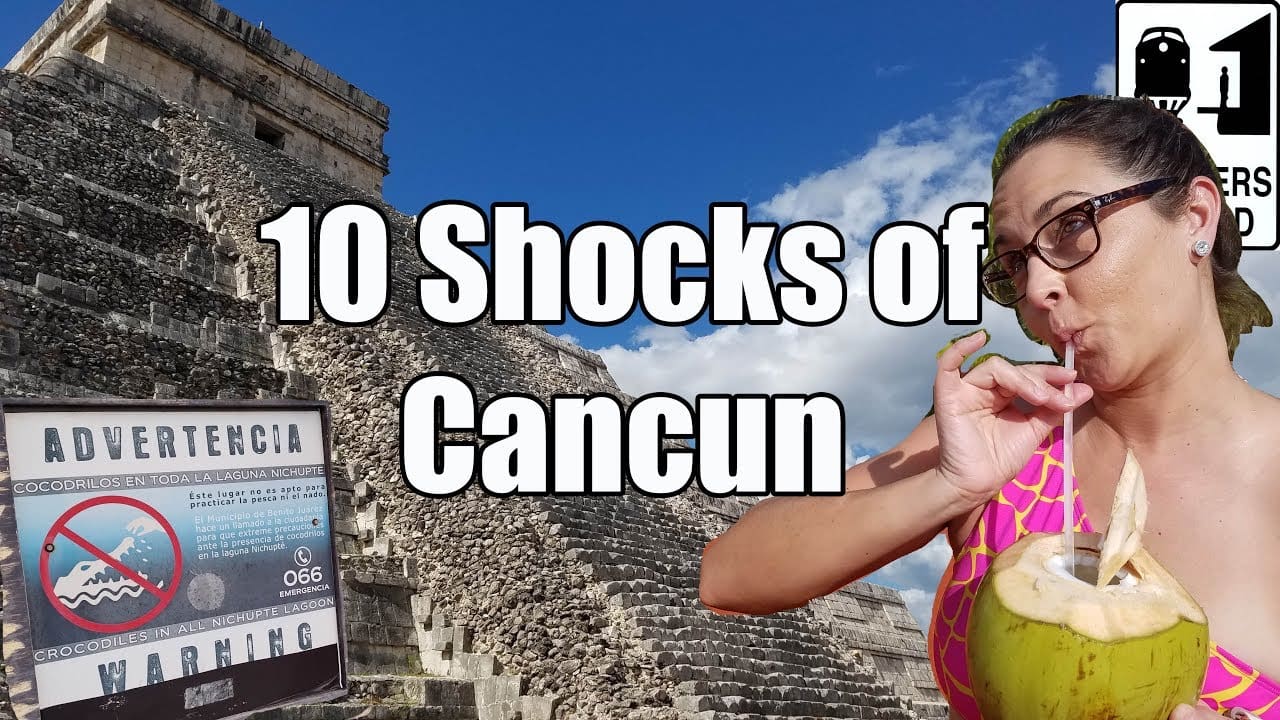
Hey there, fellow travelers!
Today we’re posting from Cancun, Mexico. We love to help travelers prepare for
their vacations, and other than telling you the best things to do, we love to
share the things that will shock you upon arriving in a new destination. Today
we’re sharing the twelve travel shocks of visiting Cancun.
#1 Airport Arrivals
It won’t take long for the first shock of your Cancun
vacation. When you leave the arrivals area, you will be bombarded with offers.
From time shares, to resorts, tours and taxis, you will have people coming at
you from every direction and it can be overwhelming. Don’t be pressured into a
sales pitch. The taxi prices are also shocking, they charge a lot more to take
you to your resort. It’s easiest to arrange an airport pickup from your Cancun
resort, and will save you from trying to decide amidst the chaos of the
airport. It will likely be cheaper, too. As long as we’re talking about money
in Cancun, know that a lot of the ATM’s in Cancun will dispense U.S. Dollars.
You’ll pay a huge fee and get a terrible exchange rate; we paid 10% in fees to
withdraw dollars. The banks will have ATMs that give you pesos if that’s what
you want.
#2 Beauty of the Mayan Riviera
The beaches around Cancun are amazing. Even in February, the
ocean is so warm and pleasant, ringed by soft sand beaches. All of the beaches
in Cancun are public, but it can be difficult to get to them without going
through resorts. Either ask your hotel or your taxi driver exactly how and
where to get onto the public beaches.
Don’t ruin your Cancun trip with a sunburn. The sun here is
super intense, and you’ll be shocked at how easily your skin can burn. Even
when you’re not at the beach, you have to be super vigilant about applying, and
reapplying, sunscreen throughout the day.
#4 Mayan Ruins Near Cancun
If you venture outside of the resort during your Cancun
vacation, you’ll be shocked at all of the Mayan ruins. Chichén Itzá is the most famous ruin near Cancun, and is one of the
New Seven Wonders of the World. Many travelers are surprised to learn there is
so much more to Cancun outside the all-inclusive resorts.
#5 Things to Do in Cancun
Besides the all-inclusive resorts, Cancun beaches and Mayan ruins, there are
still tons of things to do in Cancun. There’s a huge waterpark, eco-parks,
Cancun’s downtown area, Tulum, Mercado 28, and more! This is what make Cancun
such a great vacation destination; there are things to do for all ages! There’s
snorkeling, diving, sport fishing, and parasailing.
#6 Tourist Infrastructure in Cancun
There’s really excellent tourist infrastructure throughout the
whole region; many English speakers, lots of tour agencies and good roads for
traveling. In other parts of Mexico, that’s just not true, so if you’ve
traveled in other areas of Mexico and had trouble finding English speakers, you
will be surprised at the infrastructure of Cancun.
#7 Insane Number of Insane Tourists
Cancun can get crazy crowded with tourists, and all-inclusive
resorts tend to draw a party crowd, looking for unlimited alcohol. Cancun
attracts all types of tourists, and lots of them. During December, January and
Spring Break, Cancun gets crazy. Either book ahead or avoid these times. It’s
also important to find the right kind of resort for you. Some are geared to a
party crowd, while others are geared towards families.
#8 Cancun Weather
When it comes to weather, the best time to visit Cancun is any
time! In February, it’s already in the 80’s each day, while May through
September can be pretty hot in Cancun. You’ll get better Cancun deals in those
months, but make sure you stay hydrated.
#9 Driving in Cancun
Driving in Cancun can come as a shock to travelers. Even riding
in a taxi can be unnerving. They drive fast, and somewhat aggressively. Expect
a lot of weaving in and out of lanes. If you get pulled over for speeding, you
may have to pay the fine on the spot. It’s best to avoid driving in Mexico at
night, for safety reasons.
#10 Bargaining for Goods
It can be shocking at how much bargaining is required in
Cancun. Taxis don’t have a meter, so you have to negotiate the fare before you
get in. At the tourist markets, you will get tired of bargaining back and
forth, but it’s just part of shopping in Mexico. This also applies to tours if
you are buying them on the spot. (Be careful trusting these guys as they’ll
tell you whatever you want to hear. Don’t trust that they’ll feed you or
provide water. You’re better off signing up for tours through your hotel. The
price is usually set for those, but the quality is often better.)
#11 All-Inclusive
Cancun Resorts
All-Inclusive resorts in Cancun are very popular, although
there are other Cancun hotels you can choose from. All-Inclusive really means
all-inclusive; you don’t have to worry about a thing! Except losing your
wristband, because the replacement price of a new wristband can be a huge
shock. Don’t expect a lot of local cuisine and culture at an all-inclusive
resort in Cancun. Ask the staff what authentic options are available at the
resort restaurants.
You won’t believe how much fun you’ll have at the cenotes
around Cancun. Cenotes are sinkholes, filled with water. They are so fun for
swimming. If you aren’t a strong swimmer, you’ll want to rent a lifejacket
because they are super deep and you spend a lot of time floating and treading
water. Some of the Cancun tours will include a stop at a local cenote, but if
not, try to make time to visit one during your Cancun vacation.
We hope these twelve tips help
you prepare to visit Cancun, and lessen the shocks you have upon arrival. Have
you been to Cancun? We’d love to hear what shocked you; just leave a comment
below! For more Wolters World travel tips, check out these blog posts and
videos:
This website uses cookies to improve your experience. We'll assume you're ok with this, but you can opt-out if you wish.AcceptRead More
Privacy & Cookies Policy
Privacy Overview
This website uses cookies to improve your experience while you navigate through the website. Out of these, the cookies that are categorized as necessary are stored on your browser as they are essential for the working of basic functionalities of the website. We also use third-party cookies that help us analyze and understand how you use this website. These cookies will be stored in your browser only with your consent. You also have the option to opt-out of these cookies. But opting out of some of these cookies may affect your browsing experience.
Necessary cookies are absolutely essential for the website to function properly. This category only includes cookies that ensures basic functionalities and security features of the website. These cookies do not store any personal information.
Any cookies that may not be particularly necessary for the website to function and is used specifically to collect user personal data via analytics, ads, other embedded contents are termed as non-necessary cookies. It is mandatory to procure user consent prior to running these cookies on your website.